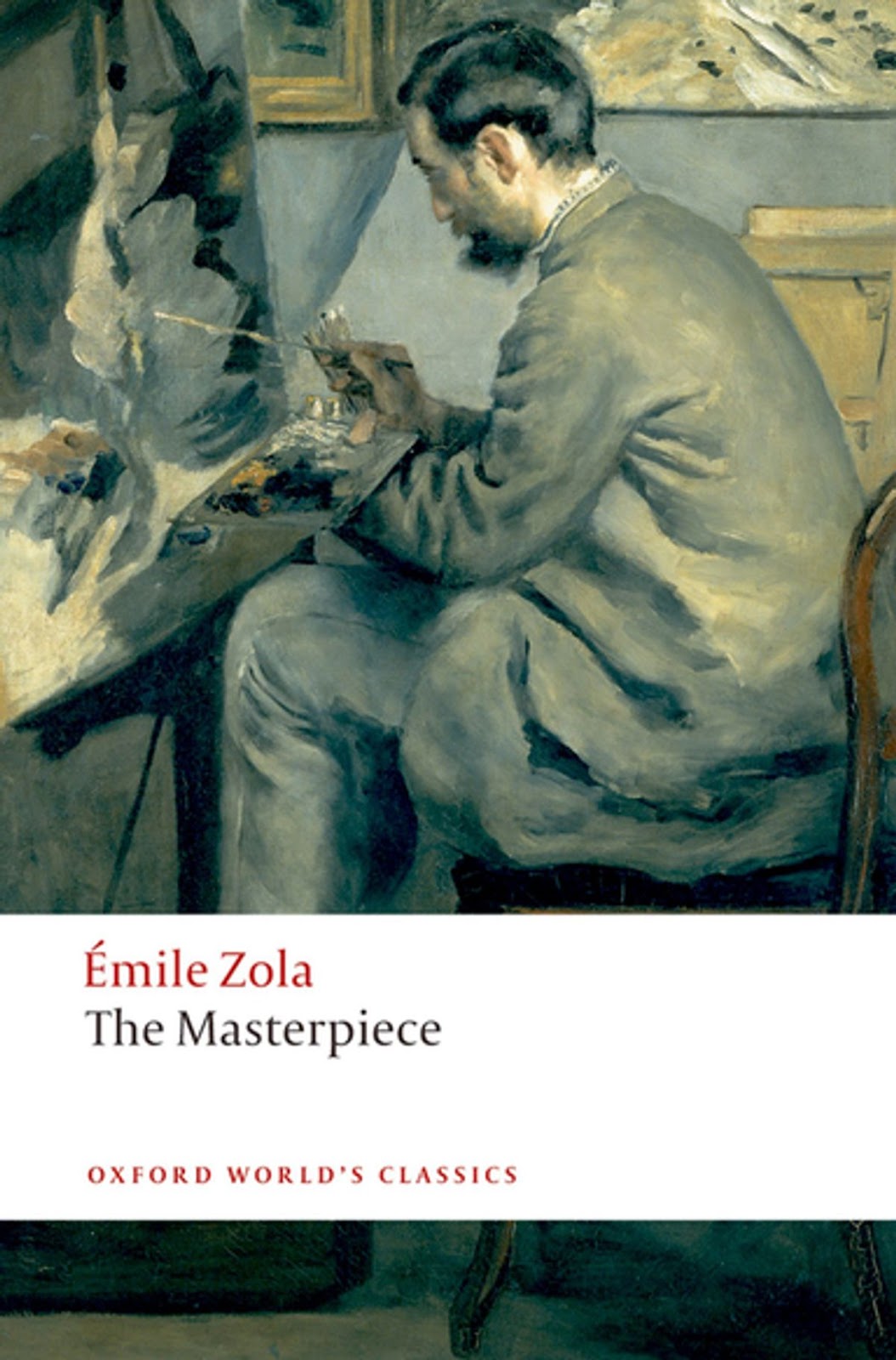
Monday, July 22, 2024

An excerpt from the preface to Giordano Bruno's "The Heroic Frenzies"

An excerpt from the preface to Giordano Bruno's "The Heroic Frenzies". The preface is addressed to Sir Philip Sidney

(this is quoted in Ingrid Rowland's biography of Giordano Bruno)

___________________________________

It is truly, O most generous Sir, the work of a low, filthy animal nature to have made oneself the constant admirer, and to have fixed a solicitous attachment upon or around the beauty of a woman’s body. Good God! What more vile and ignoble vision can present itself to a clear-sighted eye than a man, brooding, afflicted, tormented, sorry, melancholy; who waxes now cold, now hot, now boiling, now trembling, now pale, now blushing, now in a pose of perplexity, now in the act of decisiveness, a man who spends the best season and the choicest fruits of his life distilling the elixir of his brain toward putting into thought and writ and sealing in public monuments those endless tortures, those grave torments, those reasoned arguments, those laborious thoughts and those bitter desires addressed to the tyranny of an unworthy, imbecilic, foolish and sordid smut?

What tragicomedy, what act, I say, more deserving of pity and laughter could be produced in this theater of the world, on this stage of our perceptions, than these many subjugated men, rendered pensive, contemplative, constant, steadfast, faithful, lovers, devotees, adorers, and slaves of a thing without faith, bereft of all constancy, destitute of intelligence, empty of all merit, void of any acknowledgment or gratitude, where no more sense, intellect, or goodness is to be obtained than might be found in a statue or a painting on a wall? And where there abound more disdain, arrogance, effrontery, vainglory, rage, scorn, perfidy, lust, greed, ingratitude, and other mortal vices than the poisons and instruments of death that could have issued forth from Pandora’s box, all to have, alas, such expansive accommodation within the brain of such a monster? Behold, inscribed on paper, enclosed in books, set before the eyes, and intoned in the ears, a noise, a commotion, a clash of devices, of emblems, of mottoes, of epistles, of sonnets, of epigrams, of books, of chattering scribbles, of terminal sweats, of lives consumed, of cries that deafen the stars, laments that make hell’s caverns reverberate, aches that strike the living dumb, sights that exhaust the pity of the gods, for those eyes, for those cheeks, for that bosom, for that white, for that crimson, for that tongue, for that tooth, for that lip, for that hair, that dress, that mantle, that glove, that slipper, that high heel, that avarice, that giggle, that scorn, that empty window, that eclipse of the sun, that throbbing, that disgust, that stench, that sepulchre, that cesspit, that menstruation, that carrion, that malaria, that uttermost insult and lapse of nature, that with a surface, a shadow, a phantasm, a dream, an enchantment of Circe plied in the service of reproduction, should deceive in the matter of beauty; which simultaneously comes and goes, issues and dies, flowers and rots, and is somewhat beautiful on the outside, but truly and fixedly contains within a shipyard, a workshop, a customhouse, a marketplace of every foulness, toxin, and poison that our stepmother Nature has managed to produce: and once the seed she requires has been paid out, she often repays it with a morass, a remorse, a sadness, a flaccidity, a headache, a lassitude, this and that distemper that are known to all the world, so that every place aches bitterly where it itched so sweetly before.

_____________________________________

Here's an excerpt from another of his works, a dialogue called "Cause, Principle, and Unity"


Poliinnio: As I was studying in my little sanctuary of the Muses, I came upon that passage in Aristotle, at the beginning of the Physics, in which, when he wishes to expound upon what the primal matter may be, he takes as its mirror the feminine sex, that sex, I say, which is wayward, fragile, inconstant, soft, feeble, unlucky, ignoble, vile, abject, despicable, unworthy, reprobate, sinister, detestable, frigid, deformed, empty, vain, indiscreet, insane, perfidious, sluggish, affected, filthy, ungrateful, lacking, maimed, imperfect, inchoate, insufficient, cut short, attenuated, that rust, that caterpillar, that chaff, plague, disease, death.

Among us placed by nature at God’s will

To be a burden and a bitter pill.

Gervasio: You humanists, who call yourselves professors of good literature, when you grow so full of your great ideas that you can’t contain yourselves anymore, you have nothing better to do than dump them on the poor women, just as, when another kind of frenzy takes you, you vent it on the first of your wretched students who passes by.

Thursday, July 4, 2024

Hobbledehoy

An excerpt from Anthony Trollope's The Small House at Allington:


I have said that John Eames had been petted by none but his mother, but I would not have it supposed, on this account, that John Eames had no friends. There is a class of young men who never get petted, though they may not be the less esteemed, or perhaps loved. They do not come forth to the world as Apollos, nor shine at all, keeping what light they may have for inward purposes. Such young men are often awkward, ungainly, and not yet formed in their gait; they straggle with their limbs, and are shy; words do not come to them with ease, when words are required, among any but their accustomed associates. Social meetings are periods of penance to them, and any appearance in public will unnerve them. They go much about alone, and blush when women speak to them. In truth, they are not as yet men, whatever the number may be of their years; and, as they are no longer boys, the world has found for them the ungraceful name of hobbledehoy.

Such observations, however, as I have been enabled to make on this matter have led me to believe that the hobbledehoy is by no means the least valuable species of the human race. When I compare the hobbledehoy of one or two and twenty to some finished Apollo of the same age, I regard the former as unripe fruit, and the latter as fruit that is ripe. Then comes the question as to the two fruits. Which is the better fruit, that which ripens early—which is, perhaps, favoured with some little forcing apparatus, or which, at least, is backed by the warmth of a southern wall; or that fruit of slower growth, as to which nature works without assistance, on which the sun operates in its own time,—or perhaps never operates if some ungenial shade has been allowed to interpose itself? The world, no doubt, is in favour of the forcing apparatus or of the southern wall. The fruit comes certainly, and at an assured period. It is spotless, speckless, and of a certain quality by no means despicable. The owner has it when he wants it, and it serves its turn. But, nevertheless, according to my thinking, the fullest flavour of the sun is given to that other fruit,—is given in the sun's own good time, if so be that no ungenial shade has interposed itself. I like the smack of the natural growth, and like it, perhaps, the better because that which has been obtained has been obtained without favour.

But the hobbledehoy, though he blushes when women address him, and is uneasy even when he is near them, though he is not master of his limbs in a ball-room, and is hardly master of his tongue at any time, is the most eloquent of beings, and especially eloquent among beautiful women. He enjoys all the triumphs of a Don Juan, without any of Don Juan's heartlessness, and is able to conquer in all encounters, through the force of his wit and the sweetness of his voice. But this eloquence is heard only by his own inner ears, and these triumphs are the triumphs of his imagination.

The true hobbledehoy is much alone, not being greatly given to social intercourse even with other hobbledehoys—a trait in his character which I think has hardly been sufficiently observed by the world at large. He has probably become a hobbledehoy instead of an Apollo, because circumstances have not afforded him much social intercourse; and, therefore, he wanders about in solitude, taking long walks, in which he dreams of those successes which are so far removed from his powers of achievement. Out in the fields, with his stick in his hand, he is very eloquent, cutting off the heads of the springing summer weeds, as he practises his oratory with energy. And thus he feeds an imagination for which those who know him give him but scanty credit, and unconsciously prepares himself for that latter ripening, if only the ungenial shade will some day cease to interpose itself.

Such hobbledehoys receive but little petting, unless it be from a mother; and such a hobbledehoy was John Eames when he was sent away from Guestwick to begin his life in the big room of a public office in London. 

Sunday, July 30, 2023

An excerpt from Umberto Eco's The Name of the Rose

“But now tell me,” William was saying, “why? Why did you want to shield this book more than so many others? Why did you hide—though not at the price of crime—treatises on necromancy, pages that may have blasphemed against the name of God, while for these pages you damned your brothers and have damned yourself? There are many other books that speak of comedy, many others that praise laughter. Why did this one fill you with such fear?”


“Because it was by the Philosopher. Every book by that man has destroyed a part of the learning that Christianity had accumulated over the centuries. The fathers had said everything that needed to be known about the power of the Word, but then Boethius had only to gloss the Philosopher and the divine mystery of the Word was transformed into a human parody of categories and syllogism. The book of Genesis says what has to be known about the composition of the cosmos, but it sufficed to rediscover the Physics of the Philosopher to have the universe reconceived in terms of dull and slimy matter, and the Arab Averroës almost convinced everyone of the eternity of the world. We knew everything about the divine names, and the Dominican buried by Abo—seduced by the Philosopher—renamed them, following the proud paths of natural reason. And so the cosmos, which for the Areopagite revealed itself to those who knew how to look up at the luminous cascade of the exemplary first cause, has become a preserve of terrestrial evidence for which they refer to an abstract agent. Before, we used to look to heaven, deigning only a frowning glance at the mire of matter; now we look at the earth, and we believe in the heavens because of earthly testimony. Every word of the Philosopher, by whom now even saints and prophets swear, has overturned the image of the world. But he had not succeeded in overturning the image of God. If this book were to become an object for open interpretation, we would have crossed the last boundary.”


“But what frightened you in this discussion of laughter? You cannot eliminate laughter by eliminating the book.”


“No, to be sure. But laughter is weakness, corruption, the foolishness of our flesh. It is the peasant’s entertainment, the drunkard’s license; even the church in her wisdom has granted the moment of feast, carnival, fair, this diurnal pollution that releases humors and distracts from other desires and other ambitions. . . . Still, laughter remains base, a defense for the simple, a mystery desecrated for the plebeians. The apostle also said as much: it is better to marry than to burn. Rather than rebel against God’s established order, laugh and enjoy your foul parodies of order, at the end of the meal, after you have drained jugs and flasks. Elect the king of fools, lose yourselves in the liturgy of the ass and the pig, play at performing your saturnalia head down. . . . But here, here”—now Jorge struck the table with his finger, near the book William was holding open—“here the function of laughter is reversed, it is elevated to art, the doors of the world of the learned are opened to it, it becomes the object of philosophy, and of perfidious theology. . . . You saw yesterday how the simple can conceive and carry out the most lurid heresies, disavowing the laws of God and the laws of nature. But the church can deal with the heresy of the simple, who condemn themselves on their own, destroyed by their ignorance. The ignorant madness of Dolcino and his like will never cause a crisis in the divine order. He will preach violence and will die of violence, will leave no trace, will be consumed as carnival is consumed, and it does not matter whether during the feast the epiphany of the world upside down will be produced on earth for a brief time. Provided the act is not transformed into plan, provided this vulgar tongue does not find a Latin that translates it. Laughter frees the villein from fear of the Devil, because in the feast of fools the Devil also appears poor and foolish, and therefore controllable. But this book could teach that freeing oneself of the fear of the Devil is wisdom. When he laughs, as the wine gurgles in his throat, the villein feels he is master, because he has overturned his position with respect to his lord; but this book could teach learned men the clever and, from that moment, illustrious artifices that could legitimatize the reversal. Then what in the villein is still, fortunately, an operation of the belly would be transformed into an operation of the brain. That laughter is proper to man is a sign of our limitation, sinners that we are. But from this book many corrupt minds like yours would draw the extreme syllogism, whereby laughter is man’s end! Laughter, for a few moments, distracts the villein from fear. But law is imposed by fear, whose true name is fear of God. This book could strike the Luciferine spark that would set a new fire to the whole world, and laughter would be defined as the new art, unknown even to Prometheus, for canceling fear. To the villein who laughs, at that moment, dying does not matter: but then, when the license is past, the liturgy again imposes on him, according to the divine plan, the fear of death. And from this book there could be born the new destructive aim to destroy death through redemption from fear. And what would we be, we sinful creatures, without fear, perhaps the most foresighted, the most loving of the divine gifts? For centuries the doctors and the fathers have spread perfumed essences of holy learning to redeem, through the thought of that which is lofty, the wretchedness and temptation of that which is base. And this book—considering comedy a wondrous medicine, with its satire and mime, which would produce the purification of the passions through the enactment of defect, fault, weakness—would induce false scholars to try to redeem the lofty with a diabolical reversal: through the acceptance of the base. This book could prompt the idea that man can wish to have on earth (as your Bacon suggested with regard to natural magic) the abundance of the land of Cockaigne. But this is what we cannot and must not have. Look at the young monks who shamelessly read the parodizing buffoonery of the Coena Cypriani. What a diabolical transfiguration of the Holy Scripture! And yet as they read it they know it is evil. But on the day when the Philosopher’s word would justify the marginal jests of the debauched imagination, or when what has been marginal would leap to the center, every trace of the center would be lost. The people of God would be transformed into an assembly of monsters belched forth from the abysses of the terra incognita, and at that moment the edge of the known world would become the heart of the Christian empire, the Arimaspi on the throne of Peter, Blemmyes in the monasteries, dwarfs with huge bellies and immense heads in charge of the library! Servants laying down the law, we (but you, too, then) obeying, in the absence of any law. A Greek philosopher (whom your Aristotle quotes here, an accomplice and foul auctoritas) said that the seriousness of opponents must be dispelled with laughter, and laughter opposed with seriousness. The prudence of our fathers made its choice: if laughter is the delight of the plebeians, the license of the plebeians must be restrained and humiliated, and intimidated by sternness. And the plebeians have no weapons for refining their laughter until they have made it an instrument against the seriousness of the spiritual shepherds who must lead them to eternal life and rescue them from the seductions of belly, pudenda, food, their sordid desires. But if one day somebody, brandishing the words of the Philosopher and therefore speaking as a philosopher, were to raise the weapon of laughter to the condition of subtle weapon, if the rhetoric of conviction were replaced by the rhetoric of mockery, if the topics of the patient construction of the images of redemption were to be replaced by the topics of the impatient dismantling and upsetting of every holy and venerable image—oh, that day even you, William, and all your knowledge, would be swept away!”

Tuesday, May 9, 2023

Two excerpts from Orlando Furioso

Couple of excerpts from Orlando Furioso (tr. Barbara Reynolds) which depict poet's views on gender. 

This first excerpt is from the opening of Canto V.

1

No creatures on the earth, no matter whether
Of peaceful disposition, mild and kind,
Or fierce and merciless as wintry weather,
Are hostile to the females of their kind.
The she-bear and her mate in sport together,
The lion and the lioness, we find;
The she-wolf and the wolf at peace appear;
The heifer from the bull has naught to fear.

2

What dreadful plague, what fury of despair
In our tormented bosoms now holds sway,
That wives and husbands constantly we hear
Wounding each other with the things they say?
With scratching, bruising, tearing out of hair,
Assault and battery, in bitter fray
They drench with scalding tears the marriage-bed,
And not tears only; sometimes blood is shed.

3

Not only a great wrong, but in God’s sight
An outrage against Nature he commits
Who with his gentle helpmeet stoops to fight,
Or in her face a lovely woman hits,
Or harms a hair upon her head; but quite
Inhuman is the man who her throat slits,
Or chokes or poisons her; he, in my eyes,
Is not a man, but fiend in human guise.


**************

Another excerpt from earlier in the poem, the canto IV, depicts Rinaldo's outrage at the unequal and unjust laws governing sexuality. Ginevra is a Scottish princess who is rescued by Rinaldo. Her name is Italianised version of Guinevere and her story in the poem has parallels with that of the namesake queen in the Arthurian tales.


63
Rinaldo thought a while and then he said:
‘A damsel is condemned to death because
She gave her lover solace in her bed
Who with desire for her tormented was?
A curse upon the legislator’s head!
And cursed be all who tolerate such laws!
Death rather to such damsels as refuse,
But not to her who loves and life renews.

64
‘And in my view it makes no difference
If the report is false or if it’s true,
For this does not affect her innocence
(I’d praise her anyway, if no one knew).
I know just what to say in her defence.
So now a trusty guide I ask of you
To lead me to the accuser. I’ll not waver,
For, as God is my help, I hope to save her.

65
‘I will not say she did not do this deed.
Lest I am wrong, it would be ill-advised;
But I will say that even if she did,
She does not merit to be thus chastised.
And I will say that mad and bad indeed
He was who first this evil law devised,
Which from the statute-book should be erased
And by a wiser measure be replaced.

66
‘If the same ardour, if an equal fire
Draws and compels two people ever more
To the sweet consummation of desire
(Which many ignoramuses deplore),
Why should a woman by a fate so dire
Be punished who has done what men a score
Of times will do and never will be blamed,
Nay, rather, will be praised for it and famed?

67
‘This inequality in law much wrong
Has done to women. With God’s help, I mean
To show that to have suffered it so long
The greatest of iniquities has been.’
Rinaldo’s logic carried them along.
The ancient forefathers were justly seen
To be unjust to have consented to it;
Also the king, who could and should undo it.

Sunday, April 23, 2023

Zola and The Golovlev Family


Prof. Kate Holland's essay "The Russian Rougon-Macquart: Degeneration and biological determinism in The Golovlev Family" provides some fascinating details about reception of Zola's works in Russia and the discourse of degeneration and debates around the concept of biological determinism that took place there in the later decades of the 19th century. In this sense, Russia was not really much different from western European countries where writers and intellectuals were participating in similar debates during the same time period. The original trigger was the popularisation of the ideas of Charles Darwin, more than the actual ideas in The Origin of Species it was the interpretations of those ideas and the sociological and historical implications of those interpretations that triggered these debates. In France it was the defeat in the Franco-Prussian war that gave these debates an added edge. The high point of this European debate was probably the publishing of the polemical book of the same name by the Austrian-Jewish writer Max Nordau. Nordau's book was extremely popular in the whole of western Europe and in Russia as well. But as Prof Holland says in the essay, the degenenation discourse in Russia predated Nordau's book and the debate there mostly centered around novels: 

"the degeneration theme proliferates in Russian literature of the 1870s, well before the publication of Nordau’s treatise, and indeed it was the novel, rather than scientific tracts, which brought degeneration discourse to Russia in this period. French naturalist writer Emile Zola’s works served as a central source of early degeneration discourse." 

As anyone who has read about Zola's life would know, in the early 70s, much before the eventual commercial success he achieved with L'Assommoir, he wrote a regular column called Letters from Paris for the liberal Russian magazine "The European Messenger." His columns mainly focused on the dispatches from the world of arts and letters in Paris. He had got this gig based on a recommendation from Turgenev. His early novels in the Rougon-Macquart series were also serialized in the magazine, most of them almost contemporaneously with their French publication. In fact the translation of the the fifth Rougon-Macquart novel La Faute de l'abbé Mouret was actually published before the publication of the original in France. But as his novels became more and more controversial and his literary doctrines, if not the actual novels, became more and more strident, his popularity in Russia declined. Eventually his novel Nana, with its controversial erotic subject matter, proved to be the last straw for his relationship with the magazine. 

In the essay Prof Holland says that Mikhail Saltykov-Shchedrin read and followed Zola's work closely and was one of the first Russians to adopt degeneration discourse and consciously use it to structure a work of fiction:

In his 1875–1880 novel-chronicle, The Golovlev Family, he represented a family afflicted by hereditary degeneracy, in which the older generation’s defects were reproduced in the younger, as each subsequent generation exhibited more telltale “stigmata of degeneracy” such as alcoholism, suicide, and prostitution. Upon first serialization The Golovlev Family was immediately recognized by critics as a “Russian Rougon-Macquart,” a work heavily influenced by Zola’s depictions of hereditary degeneracy. Yet though degeneration discourse shapes the overall conception of The Golovlev Family, it is tempered by a strong ideological and moral narrative voice, which insists on the continuing possibility of human moral potentiality and individual agency. This narrative perspective, coupled with the novel’s parodic recreation of earlier models of the Russian noble family novel, reveals a distinctly Russian degeneration discourse, in which biological factors compete with social and historical circumstances as explanations for human behavior. In this regard, The Golovlev Family reflects an increasingly self-confident Russian critical discourse that defends the national realist tradition against the predations of French naturalism. (emphasis mine)


I had forgotten some of the details from the novel but reading the essay brought back some of the memories of the book. The descriptions of the alcoholism, the relentless physical decline of the main characters mercilessly documented, regression across generations, the curse of inherited degeneracy, all point to the argument mentioned in the excerpt above that Saltykov-Schedrin was very consciously participating in the degeneration discourse through his novel. What I have emphasized in the passage above is the main thrust of the argument in Prof Holland's essay. It describes how Saltykov-Schedrin's rejected pure biological determinism and how he adopted a more "hybrid" mode of explanation with lots of examples from the novel. As a conclusion:

Working against the structures of degeneration and impulse of biological determinism throughout the novel is the voice of the narrator, who upholds the values of morality and irony and who reveals the novel’s characters’ culpability in their own fates, thus avoiding the tragic conclusions implicit in pure biological determinism. (emphasis mine)

I had some bones to pick with this argument. Not about the interpretation of The Golovlev Family but of Zola's novels. Zola in a way is to be blamed himself for this because apart from writing novels he also propounded doctrines, which naturally forced his readers to read his novels in a pre-structured, pre-defined way i.e. through the lens of his own literary principles. In my opinion it is doing a disservice to his novels. My own view is that Zola's Rougon-Macquart novels are also "hybrid" in almost exactly the same way Prof Holland is describing The Golovlev Family to be. It is not just about biological determinism - there is also ethical and social critique in them. A consistent and recurring theme in many of his novels is the excesses of the second empire society. It was the the pomp, the baseness, the constant falsity that sapped the spirit of the nation, he says, which finally came to fruition in the defeat in the Franco-Prussian war. The novels like Germinal, The Ladies' Paradise, The Kill, The Belly of Paris - all of them have stinging critique of the process and institutions of a high-capitalist society in an imperial metropole. In the novel La Joie de vivre (one of my personal favourites) he actually criticizes the pessimism associated with the degeneration discourse. Even in La Terre, his most "extreme" and pessimistic novel, the most susceptible among his novels to the charge of blind or pure biological determinism, the main character Jean is portrayed as someone who is not implicated and who serves the same purpose as what Prof Holland says the narrator serves in The Golovlev Family. Incidentally Jean again plays a similar role in La Debacle, where his sturdiness is contrasted with the city-bred Maurice who is prone to pessimism and hysterical collapse associated with degeneracy and this contrast is then used to offer an ethical critique. It is also worth noting that Zola in his later life became a vocal opponent of decadence and degeneration, to the point of railing against celibacy and contraception!

I mean it is obvious that Zola's conception of man as a biological being first of all, subject to the laws of nature and the cycle of life (at least as understood in the 19th century by him and his ilk), is markedly different from that of in the traditional Russian realist novel which presents man as an autonomous agent, grappling with ethical and existential concerns and choices. But to reduce this "naturalistic" view of man to a crude form of biological determinism is do Zola an injustice. I wish Zola had not written "The Experimental Novel" or at least the critics would ignore it and focus more on his novels instead.

Overall I really loved reading the essay. It is very informative and immensely thought provoking. This essay is collected in the volume "Russian Writers and fin de siècle: The Twilight of Realism." It is edited by Katharine Bowers and Ani Kokobobo. Other essays also look very interesting but I am yet to read them.  

Thursday, April 13, 2023

An excerpt from "Mimesis"

An excerpt from Eric Auerbach's Mimesis, Chapter 5 "Roland against Ganelon"


It appears to me that the first elevated style of the European Middle Ages arose at the moment when the single event is filled with life. That is why this style is so rich in individual scenes of great effectiveness, scenes in which only a very few characters confront one another, in which the gestures and speeches of a brief occurrence come out in sharp relief. The characters, facing one another at close quarters, without much room for movement, nevertheless stand there as individuals clearly set off from one another. What is said of them never degenerates into mere talk; it always remains a solemn statement in which every address, every phrase, and indeed every word, has a value of its own, separate and emphatic, with no trace of softness and no relaxed flow. Confronting the reality of life, this style is neither able nor willing to deal with its breadths or depths. It is limited in time, place, and social milieu. It simplifies the events of the past by stylizing and idealizing them. The feeling it seeks to arouse in its auditor is admiration and amazement for a distant world, whose instincts and ideals, though they certainly remain his own, yet evolve in such uncompromising purity and freedom, in comparison with the friction and resistance of real life, as his practical existence could not possibly attain. Human movements and great, towering exemplary figures appear with striking effect; his own life is not there at all. To be sure, in the very tone of the Chanson de Roland there is a great deal of contemporaneity. It does not begin with an announcement which removes the events to a distant past (“Long ago it came to pass … Of olden days I will sing …”) but with a strongly immediate note, as though Charles, our great Emperor, were almost still a living man. The naive transfer of events three centuries past into the ethos of feudal society of the early crusading period, the exploitation of the subject matter in the interest of ecclesiastic and feudal propaganda, give the poem a quality of living presentness. Something like a nascent national consciousness is even perceptible in it. When we read—to choose a simple illustration—the line in which Roland tries to organize the imminent attack of the Frankish knights (1165):

Seignurs barons, suef, le pas tenant!

we hear the echo of a common scene of contemporary feudal cavalry maneuvers. But these are isolated instances. Class limitation, idealization, simplification, and the shimmering veil of legend prevail.

The style of the French heroic epic is an elevated style in which the structural concept of reality is still extremely rigid and which succeeds in representing only a narrow portion of objective life circumscribed by distance in time, simplification of perspective, and class limitations. I shall be saying nothing new, but merely reformulating what I have said many times, if I add that in this style the separation of the realm of the heroic and sublime from that of the practical and everyday is a matter of course.

Sunday, April 9, 2023

The Émile Zola Tag #Zoladdiction2023


Here's my response to the Émile Zola tag from Fanda's blog 


How was your first introduction to Émile Zola? We'd love to hear your stories!

My first real introduction to Zola was through Germinal, in the translation by Roger Pearson published by Penguin Classics. Of course, I knew about him and his work, at least cursorily, specially the role he had played in the Dreyfus affair. I also knew about his description heavy style of writing. Around in 2014 when I first decided to read Zola, I was in a major reading slump which had lasted a long time. I used to always pick-up one of those topical non-fiction books or "novels of the season" which everyone was talking about without having any real personal interest of my own and almost always after some time leave them back on the shelf unfinished. I had also grown weary of a mode of writing which was interioristic, confesssional, and self-centred, which was the default style of so much of contemporary literary fiction (If I recall correctly, I was reading Knausgaard at the time). 


Germinal was a breath of fresh air in that sense. Here was a writer not writing about his personal "struggle." He was not interested in his own life, his own childhood, his own memories, his own sexual life. He was more passionate about the external world, about people unlike himself. As I continued reading Germinal, I was completely taken aback by how intense it was. Based on what I knew beforehand from cursory readings about Zola, I had expected it to be a somewhat dull, dreary, documentary account of the struggles of coal miners. I had also expected sentimental platitudes about class struggle and evils of capitalism. I was just not prepared for the intense, gruesome and at times hallucinogenic descriptions that went on and on for many pages that left you stunned at the end, completely overwhelmed with sensory overload. The descriptions of the brutish living conditions of the poor, of the interiors of the mine, of the strike and its aftermath, this was nothing like I had ever read before. I particularly remember a section where Zola describes the fate of a couple of horses who were made to haul the coal inside the mines. As I was reading those passages, my hands were shaking, my throat was getting dry and there was a strong burning sensation in my eyes. I don't think I ever had such a physical reaction to a reading. A few months after Germinal, I picked up L'Assommoir (The Drinking Den, in the translation by Robin Buss, also published by Penguin) and I had an even stronger reaction this time. I read the last hundred pages which describes the infernal descent of the main character Gervaise, in almost a single sitting, late into the night. At the end I felt almost physically crushed, as if I had been hit by a sledgehammer on my head which left me completely stunned, almost literally (hinted at in the original French tile). 

I had a become a devoted fan of Zola by then but it took me some time to decide that I would read all of his Rougon-Macquart novels, and even longer to actually complete reading all fo them. It was only in 2021 that I finished reading all the 20 novels in the series (plus Thérèse Raquin)


Do you read Zola's randomly, or do you follow a certain, or even your own, order?

I read randomly. I see many prospective readers asking this question on twitter. My advice always is, you should start with the best, like I did - with Germinal or L'Assommoir. If you want something shorter, then Thérèse Raquin - it is somewhat unrepresentative of his style, though still spell binding, powerful and shocking.

When I re-read the series, I will try to read them in chronological order. It is always interesting to analyse how a writer grows or changes over a course of time.

What do you like and/or dislike from Zola? It can be his works, views, or personality. Or if you've just found Zola: What makes you decided to read Zola?

I like the particular school of fiction, call it realism, or as Zola preferred to call it, naturalism, which he took to all possible extremes. Zola brought a sense of perfection to this style of fiction writing, which Balzac had originally pioneered. In Balzac and Zola, you don't just see people, with their hopes, dreams, struggles and desires, but you also see, often much more vividly, the world in which they live in, the systems which are pitted against them, the institutions of modern life in an advanced capitalist society that they must work with by either manipulating them or by struggling against their workings and in the process often getting crushed and defeated by them. In most realistic fiction this context remains in the background but in Zola and Balzac this context itself becomes the main source of interest. I also love how unflinching, how relentless they both are in how they go about it.

I also like the scientific and materialistic view of "life" and how Zola uses his fiction to explore its implications, again something that was there in Balzac as well but then was perfected by Zola. This is the Darwinian view (in Balzac's case it was the more mystical view, the then prevalent philosophy of "vitalism"), which sees human beings on the same continuum with all other living beings.

I can't think of anything I really dislike about Zola. On a few occasions sometimes I do get impatient with those descriptions, wondering if he would come to the point soon but at the end I always realize it is the problem with the reader who is short of time or too impatient to finish the current book and jump to the next one and not the writer.

If you must spend a day with one character from Zola's books, who would you rather be with? And what both of you would do? (This is hard, I know! Zola didn't create many loveable characters 🤭)

I love Pauline from "La joie de vivre." I know some readers complain about her being too perfect but then in the book itself she is compared with Virgin Mary! If I meet her, I will ask her about her love of life, despite all the pain, disappointments and miseries that life throws at us with abandon. I think it might be an interesting meeting, because I think I am somewhat like Lazare myself, at least in some of my blacker Schopenhauerian moods.

Name one of Zola's books you would recommend others to read! Or if you haven't read him, which book would you like to start with?

Like I mentioned before, I will definitely recommend you start with Germinal or L'Assommoir. If you are not sure and want something shorter that you can read in a few sittings, then Thérèse Raquin. Some of my other favourite Zola novels are: La Terre, L'Argent, La joie de vivre, Au Bonheur des Dames, La Bête humaine, L'Œuvre, and La Débâcle. But really, I will recommend you read them all. But make sure, you read them in modern translations, preferably with introductions and annotations which explain the historical and cultural context (in other words, read them in the Oxford World's Classics editions).  

You were invited in one of Zola's soirees (Zola's famous literary dinners of Naturalism writers) at Médan tonight. You may listen to all the conversation/discussion, but you're only allowed to suggest one topic - what would that be?

What an interesting question! If I were invited to one of those "les Soirées de Médan," since I was coming from the 21st century future, I would ask Zola if he still felt optimistic about the coming triumph of science, which he sang paeans of and wrote so rhapsodically about, after what I explain him what happened in the 20th century, in the two world wars, or the nuclear bomb, and how instead of liberation science and technology found newer ways of enslaving man. 

What is your least favorite book from Zola?

Perhaps, Pot-Bouille. I think it lacked his characteristic style and its sour mood didn't really catch me at the time. It may also have been the case (more likely actually) that I was not in the right mood for the book at the time. 

Have you read any book/work by other authors about Zola? Biography, companion book, essay, historical fiction, etc. Share them, please! (It may inspire others). If you haven't, would you like to?

I haven't read a lot of supplemental works on Zola but I do want to. I am definitely going to prioritise them soon. That said, the introductions and the end notes in the OUP editions of Zola are extremely good (specially those by Brian Nelson, Valerie Minogue, Roger Pearson, and Robert Lethbridge). 

I want to read the big biography by Frederick Brown, if I can find and procure it. I also want to read some general studies of naturalism, like the ones by David Bagueley. I also want to read some historical works about 19th century France, specially the second empire and the third republic which focus on social and cultural history of the period.

Of the Rougons, the Macquarts, and the Mourets, which family do you like best? Why? (wrong-answers are acceptable 😜)

Zola was at his best writing about the working class characters and those who are at the bottom of the society. So even though that world is full of ugliness, pain, and suffering, I will go with the Macquarts. 

Your favourite Zola's quote(s) ?

Since I have it handy, here're a short passage from Germinal:

Was Darwin right, then? Would the world forever be a battleground on which the strong devoured the weak in pursuit of the perfection and continuity of the species? The question worried him, even if, as a man sure in the certainty of his own knowledge, he believed he could answer it. But there was one prospect which dispelled all his doubts and held him in thrall, and this was the idea that his first speech would be devoted to his own version of Darwin’s theory. If one class had to devour the other, then surely it was the people, still young and hardy, which would devour a bourgeoisie that had worn itself out in self-gratification? New blood would mean a new society. And by thus looking forward to a barbarian invasion that would regenerate the old, decaying nations of the world, Étienne once again demonstrated his absolute faith in the coming revolution, the real revolution, the workers’ revolution, whose conflagration would engulf the dying years of the century in flames as crimson as the morning sun which now rose bleeding into the sky.

Saturday, August 29, 2020

Henry James on Sir Walter Scott

[Copied from Walter Scott: The Critical Heritage edited by John O. Hayden. Reproduced for educational purposes only]

[Unsigned review of Nassau Senior’s Essays on Fiction by Henry James, North American Review (October 1864), xcix, 580–7.

For Senior’s criticism of Scott, see No. 29. James’s opening section, which attacks Senior as a ‘Half-critic’, has been omitted.]

He begins with Sir Walter Scott. The articles of which the paper on Scott is composed were written while the Waverley Novels were in their first editions. In our opinion this fact is their chief recommendation. It is interesting to learn the original effect of these remarkable books. It is pleasant to see their classical and time-honoured figures dealt with as the latest sensations of the year. In the year 1821, the authorship of the novels was still unavowed. But we may gather from several of Mr. Senior’s remarks the general tendency of the public faith. The reviewer has several sly hits at the author of Marmion. He points out a dozen coincidences in the talent and treatment of the poet and the romancer. And he leaves the intelligent reader to draw his own conclusions. After a short preface he proceeds to the dismemberment of each of the novels, from Rob Roy downward. In retracing one by one these long-forgotten plots and counterplots, we yield once more to something of the great master’s charm. We are inclined to believe that this charm is proof against time. The popularity which Mr. Senior celebrated forty years ago has in no measure subsided.

The only perceptible change in Sir Walter’s reputation is indeed the inevitable lot of great writers. He has submitted to the somewhat attenuating ordeal of classification; he has become a standard author. He has been provided with a seat in our literature; and if his visible stature has been by just so much curtailed, we must remember that it is only the passing guests who remain standing. Mr. Senior is a great admirer of Sir Walter, as may be gathered from the fact that he devotes two hundred pages to him. And yet he has a keen eye for his defects; and these he correctly holds to be very numerous. Yet he still loves him in spite of his defects; which we think will be the permanent attitude of posterity.

Thirty years have elapsed since the publication of the last of the Waverley series. During thirty years it has been exposed to the public view. And meanwhile an immense deal has been accomplished in the department of fiction. A vast army has sprung up, both of producers and consumers. To the latter class a novel is no longer the imposing phenomenon it was in Sir Walter’s time. It implies no very great talent; ingenuity is held to be the chief requisite for success. And indeed to write a readable novel is actually a task of so little apparent difficulty, that with many popular writers the matter is a constant trial of speed with the reading public. This was very much the case with Sir Walter. His facility in composition was almost as great as that of Mrs. Henry Wood, of modern repute. But it was the fashion among his critics to attribute this remarkable fact rather to his transcendent strength than to the vulgarity of his task. This was a wise conviction. Mrs. Wood writes three volumes in three months, to last three months. Sir Walter performed the same feat, and here, after the lapse of forty years, we still linger over those hasty pages. And we do it in the full cognizance of faults which even Mrs. Wood has avoided, of foibles for which she would blush. The public taste has been educated to a spirit of the finest discernment, the sternest exaction. No publisher would venture to offer Ivanhoe in the year 1864 as a novelty. The secrets of the novelist’s craft have been laid bare; new contrivances have been invented; and as fast as the old machinery wears out, it is repaired by the clever artisans of the day. Our modern ingenuity works prodigies of which the great Wizard never dreamed. And besides ingenuity we have had plenty of genius. We have had Dickens and Thackeray. Twenty other famous writers are working in the midst of us. The authors of Amyas Leigh, of The Cloister and the Hearth, ofRomola, have all overtaken the author of Waverley in his own walk. Sir Edward Bulwer has produced several historical tales, which, to use an expressive vulgarism, have ‘gone down’ very extensively. And yet old-fashioned, ponderous Sir Walter holds his own. 

He was the inventor of a new style. We all know the immense advantage a craftsman derives from this fact. He was the first to sport a fashion which was eventually taken up. For many years he enjoyed the good fortune of a patentee. It is difficult for the present generation to appreciate the blessings of this fashion. But when we review the modes prevailing for twenty years before, we see almost as great a difference as a sudden transition from the Spenserian ruff to the Byronic collar. We may best express Scott’s character by saying that, with one or two exceptions, he was the first English prose story-teller. He was the first fictitious writer who addressed the public from its own level, without any preoccupation of place. Richardson is classified simply by the matter of length. He is neither a romancer nor a story-teller: he is simply Richardson. The works of Fielding and Smollett are less monumental, yet we cannot help feeling that they too are writing for an age in which a single novel is meant to go a great way. And then these three writers are emphatically preachers and moralists. In the heart of their productions lurks a didactic raison d’être. Even Smollett—who at first sight appears to recount his heroes’ adventures very much as Leporello in the opera rehearses the exploits of Don Juan—aims to instruct and to edify. To posterity one of the chief attractions of Tom Jones is the fact that its author was one of the masses, that he wrote from the midst of the working, suffering mortal throng. But we feel guilty in reading the book in any such disposition of mind. We feel guilty, indeed, in admitting the question of art or science into our considerations. The story is like a vast episode in a sermon preached by a grandly humorous divine; and however we may be entertained by the way, we must not forget that our ultimate duty is to be instructed. With the minister’s week-day life we have no concern: for the present he is awful, impersonal Morality; and we shall incur his severest displeasure if we view him as Henry Fielding, Esq., as a rakish man of letters, or even as a figure in English literature. Waverley was the first novel which was self-forgetful. It proposed simply to amuse the reader, as an old English ballad amused him. It undertook to prove nothing but facts. It was the novel irresponsible. 

We do not mean to say that Scott’s great success was owing solely to this, the freshness of his method. This was, indeed, of great account, but it was as nothing compared with his own intellectual wealth. Before him no prose-writer had exhibited so vast and rich an imagination: it had not, indeed, been supposed that in prose the imaginative faculty was capable of such extended use. Since Shakespeare, no writer had created so immense a gallery of portraits, nor, on the whole, had any portraits been so lifelike. Men and women, for almost the first time out of poetry, were presented in their habits as they lived. The Waverley characters were all instinct with something of the poetic fire. To our present taste many of them may seem little better than lay-figures. But there are many kinds of lay-figures. A person who goes from the workshop of a carver of figure-heads for ships to an exhibition of wax-work, will find in the latter the very reflection of nature. And even when occasionally the waxen visages are somewhat inexpressive, he can console himself with the sight of unmistakable velvet and brocade and tartan. Scott went to his prose task with essentially the same spirit which he had brought to the composition of his poems. Between these two departments of his work the difference is very small. Portions of Marmion are very good prose; portions of Old Mortality are tolerable poetry. Scott was never a very deep, intense, poetic poet: his verse alone was unflagging. So when he attacked his prose characters with his habitual poetic inspiration, the harmony of style was hardly violated. It is a great peculiarity, and perhaps it is one of the charms of his historical tales, that history is dealt with in all poetic reverence. He is tender of the past: he knows that she is frail. He certainly knows it. Sir Walter could not have read so widely or so curiously as he did, without discovering a vast deal that was gross and ignoble in bygone times. But he excludes these elements as if he feared they would clash with his numbers. He has the same indifference to historic truth as an epic poet, without, in the novels, having the same excuse. We write historical tales differently now. We acknowledge the beauty and propriety of a certain poetic reticence. But we confine it to poetry. The task of the historical story-teller is, not to invest, but to divest the past. Tennyson’s Idyls of the King are far more one-sided, if we may so express it, than anything of Scott’s. But imagine what disclosures we should have if Mr. Charles Reade were to take it into his head to write a novel about King Arthur and his times. 

Having come thus far, we are arrested by the sudden conviction that it is useless to dogmatize upon Scott; that it is almost ungrateful to criticize him. He, least of all, would have invited or sanctioned any curious investigation of his works. They were written without pretence: all that has been claimed for them has been claimed by others than their author. They are emphatically works of entertainment. As such let us cherish and preserve them. Say what we will, we should be very sorry to lose, and equally sorry to mend them. There are few of us but can become sentimental over the uncounted hours they have cost us. There are moments of high-strung sympathy with the spirit which is abroad when we might find them rather dull—in parts; but they are capital books to have read. Who would forego the companionship of all those shadowy figures which stand side by side in their morocco niches in yonder mahogany cathedral? What youth would willingly close his eyes upon that dazzling array of female forms,—so serried that he can hardly see where to choose,—Rebecca of York, Edith Plantagenet, Mary of Scotland, sweet Lucy Ashton? What maiden would consent to drop the dear acquaintance of Halbert Glendinning, of Wilfred of Ivanhoe, of Roland Græme and Henry Morton? Scott was a born story-teller: we can give him no higher praise. Surveying his works, his character, his method, as a whole, we can liken him to nothing better than to a strong and kindly elder brother, who gathers his juvenile public about him at eventide, and pours out a stream of wondrous improvisation. Who cannot remember an experience like this? On no occasion are the delights of fiction so intense. Fiction? These are the triumphs of fact. In the richness of his invention and memory, in the infinitude of his knowledge, in his improvidence for the future, in the skill with which he answers, or rather parries, sudden questions, in his low-voiced pathos and his resounding merriment, he is identical with the ideal fireside chronicler. And thoroughly to enjoy him, we must again become as credulous as children at twilight.

Friday, August 28, 2020

Hippolyte Taine on Sir Walter Scott

[Copied from Walter Scott: The Critical Heritage edited by John O. Hayden. Reproduced for educational purposes only]


[An extract from the third volume of Taine’s Histoire de la littérature anglaise (1863–4). The translator is H.Van Laun.]


The Lady of the Lake, Marmion, The Lord of the Isles, The Fair Maid of Perth, Old Mortality, Ivanhoe, Quentin Durward, who does not know these names by heart? From Walter Scott we learned history. And yet is this history? All these pictures of a distant age are false. Costumes, scenery, externals alone are exact; actions, speech, sentiments, all the rest is civilized, embellished, arranged in modern guise. We might suspect it when looking at the character and life of the author; for what does he desire, and what do the guests, eager to hear him, demand? Is he a lover of truth as it is, foul and fierce; an inquisitive explorer, indifferent to contemporary applause, bent alone on defining the transformations of living nature? By no means. He is in history, as he is at Abbotsford, bent on arranging points of view and Gothic halls. The moon will come in well there between the towers; here is a nicely placed breastplate, the ray of light which it throws back is pleasant to see on these old hangings; suppose we took out the feudal garments from the wardrobe and invited the guests to a masquerade? The entertainment would be a fine one, in accordance with their reminiscences and their aristocratic principles. English lords, fresh from a bitter war against French democracy, ought to enter zealously into this commemoration of their ancestors. Moreover, there are ladies and young girls, and we must arrange the show, so as not to shock their severe morality and their delicate feelings, make them weep becomingly; not put on the stage overstrong passions, which they would not understand; on the contrary, select heroines to resemble them, always touching, but above all correct; young gentlemen, Evandale, Morton, Ivanhoe, irreproachably brought up, tender and grave, even slightly melancholic (it is the latest fashion), and worthy to lead them to the altar. Is there a man more suited than the author to compose such a spectacle? He is a good Protestant, a good husband, a good father, very moral, so decided a Tory that he carries off as a relic a glass from which the king has just drunk. In addition, he has neither talent nor leisure to reach the depths of his characters. He devotes himself to the exterior; he sees and describes forms and externals much more at length than inward feelings. Again, he treats his mind like a coal-mine,  serviceable for quick working, and for the greatest possible gain: a volume in a month, sometimes in a fortnight even, and this volume is worth one thousand pounds. How should he discover, or how dare exhibit, the structure of barbarous souls? This structure is too difficult to discover, and too little pleasing to show. Every two centuries, amongst men, the proportion of images and ideas, the mainspring of passions, the degree of reflection, the species of inclinations, change. Who, without a long preliminary training, now understands and relishes Dante, Rabelais, and Rubens? And how, for instance, could these great Catholic and mystical dreams, these vast temerities, or these impurities of carnal art, find entrance into the head of this gentlemanly citizen? Walter Scott pauses on the threshold of the soul, and in the vestibule of history, selects in the Renaissance and the Middle Ages only the fit and agreeable, blots out plain spoken words, licentious sensuality, bestial ferocity. After all, his characters, to whatever age he transports them, are his neighbours, ‘cannie’ farmers, vain lairds, gloved gentlemen, young marriageable ladies, all more or less commonplace, that is, steady; by their education and character at a great distance from the voluptuous fools of the Restoration, or the heroic brutes and fierce beasts of the Middle Ages. As he has the greatest supply of rich costumes, and the most inexhaustible talent for scenic effect, he makes all his people get on very pleasantly, and composes tales which, in truth, have only the merit of fashion, though that fashion may last a hundred years yet. 

That which he himself acted lasted for a shorter time. To sustain his princely hospitality and his feudal magnificence, he went into partnership with his printers; lord of the manor in public and merchant in private, he gave them his signature, without keeping a check over the use they made of it. Bankruptcy followed; at the age of fifty-five he was ruined, and one hundred and seventeen thousand pounds in debt. With admirable courage and uprightness he refused all favour, accepting nothing but time, set to work on the very day, wrote untiringly, in four years paid seventy thousand pounds, exhausted his brain so as to become paralytic, and to perish in the attempt. Neither in his conduct nor his literature did his feudal tastes succeed, and his manorial splendour was as fragile as his Gothic imaginations. He had relied on imitation, and we live by truth only; his glory is to be found elsewhere; there was something solid in his mind as well as in his writings. Beneath the lover of the Middle Ages we find, first the ‘pawky’ Scotchman, an attentive observer, whose sharpness became more intense by his familiarity with law; a good-natured man, easy and cheerful, as beseems the national character, so different from the English. One of his walking companions (Shortreed) said: ‘Eh me, sic an endless fund o’ humour and drollery as he had wi’ him! Never ten yards but we were either laughing or roaring and singing. Wherever we stopped, how brawlie he suited himsel’ to everybody! He aye did as the lave did; never made himsel’ the great man, or took ony airs in the company.’ Grown older and graver, he was none the less amiable, the most agreeable of hosts, so that one of his guests, a farmer, I think, said to his wife, when home, after having been at Abbotsford, ‘Ailie, my woman, I’m ready for my bed…I wish I could sleep for a towmont, for there’s only ae thing in this warld worth living for, and that’s the Abbotsford hunt!’ 

In addition to a mind of this kind, he had all-discerning eyes, an all retentive memory, a ceaseless studiousness which comprehended the whole of Scotland, and all classes of people; and we see his true talent arise, so agreeable, so abundant and so easy, made up of minute observation and gentle raillery, recalling at once Teniers and Addison. Doubtless he wrote badly, at times in the worst possible manner*: it is clear that he dictated, hardly re-read his writing, and readily fell into a pasty and emphatic style,—a style very common in the present times, and which we read day after day in prospectuses and newspapers. What is worse, he is terribly long and diffuse; his conversations and descriptions are interminable; he is determined, at all events, to fill three volumes. But he has given to Scotland a citizenship of literature—I mean to the whole of Scotland: scenery, monuments, houses, cottages, characters of every age and condition, from the baron to the fisherman, from the advocate to the beggar, from the lady to the fishwife. When we mention merely his name they crowd forward; who does not see them coming from every niche of memory? The Baron of Bradwardine, Dominie Sampson, Meg Merrilies, the antiquary, Edie Ochiltree, Jeanie Deans and her father,—innkeepers, shopkeepers, old wives, an entire people. What Scotch features are absent? Saving, patient, ‘cannie’, and of course ‘pawky’; the poverty of the soil and the difficulty of existence has compelled them to be so: this is the specialty of the race. The same tenacity which they introduced into everyday affairs they have introduced into mental concerns,—studious readers and perusers of antiquities and controversies, poets also; legends spring up readily in a romantic land, amidst time-honoured wars and brigandism. In a land thus prepared, and in this gloomy clime, Presbyterianism sunk its sharp roots. Such was the real and modern world, lit up by the farsetting sun of chivalry, as Sir Walter Scott found it; like a painter who, passing from great show-pictures, finds interest and beauty in the ordinary houses of a paltry provincial town, or in a farm surrounded by beds of beetroots and turnips. A continuous archness throws its smile over these interior and genre pictures, so local and minute, and which, like the Flemish, indicate the rise of well-to-do citizens. Most of these good folk are comic. Our author makes fun of them, brings out their little deceits, parsimony, fooleries, vulgarity, and the hundred thousand ridiculous habits people always contract in a narrow sphere of life. A barber, in The Antiquary, moves heaven and earth about his wigs; if the French Revolution takes root everywhere, it was because the magistrates gave up this ornament. He cries out in a lamentable voice: ‘Haud a care, haud a care, Monkbarns! God’s sake, haud a care!—Sir Arthur’s drowned already, and an ye fa’ over the cleugh too, there will be but ae wig left in the parish, and that’s the minister’s.’ Mark how the author smiles, and without malice: the barber’s candid selfishness is the effect of the man’s calling, and does not repel us. Walter Scott is never bitter; he loves men from the bottom of his heart, excuses or tolerates them; does not chastise vices, but unmasks them, and that not rudely. His greatest pleasure is to pursue at length, not indeed a vice, but a hobby; the mania for odds and ends in an antiquary, the archaeological vanity of the Baron of Bradwardine, the aristocratic drivel of the Dowager Lady Bellenden,—that is, the amusing exaggeration of an allowable taste; and this without anger, because, on the whole, these ridiculous people are estimable, and even generous. Even in rogues like Dirk Hatteraick, in cutthroats like Bothwell, he allows some goodness. In no one, not even in Major Dalgetty, a professional murderer, a result of the thirty years’ war, is the odious unveiled by the ridiculous. In this critical refinement and this benevolent philosophy, he resembles Addison. 

He resembles him again by the purity and endurance of his moral principles. His amanuensis, Mr. Laidlaw, told him that he was doing great good by his attractive and noble tales, and that young people would no longer wish to look in the literary rubbish of the circulating libraries. When Walter Scott heard this, his eyes filled with tears: ‘On his deathbed he said to his son-in-law: “Lockhart, I may have but a minute to speak to you. My dear, be a good man—be virtuous, be religious—be a good man. Nothing else will give you any comfort when you come to lie here.”’ This was almost his last word. By this fundamental honesty and this broad humanity, he was the Homer of modern citizen life. Around and after him, the novel of manners, separated from the historical romance, has produced a whole literature, and preserved the character which he stamped upon it. Miss Austen, Miss Bronté, Mrs. Gaskell, George Eliot, Bulwer, Thackeray, Dickens, and many others, paint, especially or entirely in his style, contemporary life, as it is, unembellished, in all ranks, often amongst the people, more frequently still amongst the middle class. And the causes which made the historical novel come to naught, in Scott and others, made the novel of manners, by the same authors, succeed. These men were too minute copyists and too decided moralists, incapable of the great divinations and the wide sympathies which unlock the door of history; their imagination was too literal, and their judgment too unwavering. It is precisely by these faculties that they created a new species of novel, which multiplies to this day in thousands of offshoots, with such abundance, that men of talent in this branch of literature may be counted by hundreds, and that we can only compare them, for their original and national spirit, to the great age of Dutch painting. Realistic and moral, these are their two features. They are far removed from the great imagination which creates and transforms, as it appeared in the Renaissance or in the seventeenth century, in the heroic or noble ages. They renounce free invention; they narrow themselves to scrupulous exactness; they paint with infinite detail costumes and places, changing nothing; they mark little shades of language; they are not disgusted by vulgarities or platitudes. Their information is authentic and precise. In short, they write like citizens for fellow-citizens, that is, for well-ordered people, members of a profession, whose imagination does not soar high, and sees things through a magnifying glass, unable to relish anything in the way of a picture except interiors and make-believes. Ask a cook which picture she prefers in the Museum, and she will point to a kitchen, in which the stewpans are so well painted that a man is tempted to put soup and bread in them. Yet beyond this inclination, which is now European, Englishmen have a special craving, which with them is national and dates from the preceding century; they desire that the novel, like all other things, should contribute to their great work,—the amelioration of man and society. They ask from it the glorification of virtue, and the chastisement of vice. They send it into all the corners of civil  society, and all the events of private history, in search of examples and expedients, to learn thence the means of remedying abuses, succouring miseries, avoiding temptations. They make of it an instrument of inquiry, education, and morality. A singular work, which has not its equal in all history, because in all history there has been no society like it, and which—of moderate attraction for lovers of the beautiful, admirable to lovers of the useful—offers, in the countless variety of its painting, and the invariable stability of its spirit, the picture of the only democracy which knows how to restrain, govern, and reform itself.


*See the opening of Ivanhoe: ‘Such being our chief scene, the date of our story refers to a period towards the end of the reign of Richard I, when his return from his long captivity had become an event rather wished than hoped for by his despairing subjects, who were in the meantime subjected to every species of subordinate oppression.’ It is impossible to write in a heavier style [Taine].

Belinsky on Historical Novel and Sir Walter Scott (Originally Published in 1844)

Among the men who have contributed most to the cultivation of a true view on history an honourable place belongs to the man who has written one very bad history and a multitude of excellent novels: we have in mind Walter Scott. The ignorant have proclaimed his novels to be the illegitimate product of the liaison of history with fiction. Evidently, the idea of history and fiction did not dovetail in their narrow conception. Thus, there are people who cannot for the life of them see any sense in opera as a production of art because the actors do not speak, but sing, and that does not happen in real life. Thus, there are people who consider verse as nonsense, rightly claiming that no one speaks in verse. There are different kinds of people and different kinds of narrowmindedness! The people who are seduced by the blending of history with romance regard history as a military and diplomatic chronicle, from which point of view they are, of course, right. They do not understand that the history of customs and morals, which change with every new generation, is more interesting than the history of wars and treaties, and that the renovation of morals through the renovation of generations is one of the principal means by which Providence leads mankind to perfection. They do not understand that the historic and private lives of people are mingled together and fused like holidays with workdays. Walter Scott, as a man of genius, fathomed this with his instinct. Being familiar with the chronicles, he was able not only to read their lines, but between the lines. His novels are filled with a moving crowd, are alive with passions and seething interests great and small, base and lofty, and everywhere we feel the pathos of the epoch which the author has grasped with amazing skill. To read his novel is like living the age he describes, becoming for a moment a contemporary of the characters he portrays, thinking for a moment their thoughts and feeling their emotions. He was able, as a man of genius, to throw a retrospective glance at the sanguinary intestine disturbances of ancient England and turbulences of the new England which assumed the form of conservatism and opposition, and disclosed their meaning in history, and he himself explained the origin of the French revolution to be a result of thirteen centuries of strife between the Frank and Gallic elements. 

Thursday, April 2, 2020

Erich Auerbach on the Realism of Zola's Germinal

This is an excerpt from Chapter 19 of Erich Auerbach's Mimesis: Representation of Reality in Western Literature, where he discusses the development of Realism in the context of Germinal, probably the most famous and highly regarded of all of Zola's novels. (Auerbach quotes the original text in French as well, I have omitted it here)


--------------------------------------------------------------

Emile Zola is twenty years younger than the generation of Flaubert and the Goncourts. There are connections between him and them; he is influenced by them; he stands on their shoulders; he has a great deal in common with them. He too would seem not to have been free from neurasthenia, but through his family background he is poorer in money, tradition, fastidiousness of sentiment. He stands out boldly from among the group of the aesthetic realists. We will again cite a text, to bring out this point as clearly as possible. We have chosen a passage from Germinal (1888), the novel which describes life in a coal-mining region of Northern France. It is the end of the second chapter of part 3. It is kermess time, a Sunday night in July. The workmen of the place have spent the afternoon going from one bar to another, drinking, bowling, looking at all sorts of shows. The day ends climactically with a ball, the bal du Bon-Joyeux, at the estaminet of the fat, fiftyish, but still lusty widow Désir. The ball has been going on for several hours; even the older women are coming to it now, bringing their small children.

(It was ten o’clock before anyone left. Women kept arriving, to find and take away their men; bands of children followed at their heels; and the mothers no longer troubled about appearances, took out long blond breasts like bags of oats, smeared their fat-cheeked babies with milk; while the children who could already walk, gorged with beer and on all fours under the tables, relieved themselves without shame. It was a rising sea of beer, Widow Désir’s casks broached, beer swelling out bellies, flowing from all sides, from noses, from eyes, and from elsewhere. People swelled up so, in the press, that everyone had a shoulder or a knee digging into his neighbor, all were made cheerful, at ease, by feeling one another’s elbows in this way. A continuous laugh kept mouths open, gaping to the ears. It was as hot as an oven, everyone was roasting, all made themselves comfortable, their flesh exposed, gilded in the thick smoke of the pipes; and the only difficulty was to move, a girl got up from time to time, went to the back, near the pump, tucked up her skirts, then returned. Under the garlands of colored paper the dancers no longer saw each other, they were sweating so—which encouraged the pit-boys to knock over the haulage-girls by promiscuous thrusts of their haunches. But when a strapping girl fell with a man on top of her, the cornet covered their fall with its furious sounds, the swing of feet rolled them, as if the dance had collapsed on them.
Someone passing by told Pierron that his daughter Lydie was sleeping at the door, across the sidewalk. She had swallowed her share of the stolen bottle, she was drunk, and he had to carry her in his arms, while Jeanlin and Bébert, more resistant, followed him at a distance, finding it very funny. This was the signal for departure, the families left the Bon-Joyeux, the Maheus and the Levaques decided to return to the mining village. At that moment, Père Bonnemort and old Mouque also left Montsou, both with the same sleep-walking gait, stubbornly maintaining the silence of their memories. And they all went home together, for the last time they passed through the carnival, the solidifying pans of fried stuff, the bars from which the last mugs were pouring in streams, even to the middle of the road. There was still a storm threatening, laughter rose as soon as they had left the lighted houses to lose themselves in the dark countryside. A hot breath poured from the ripe wheat, many children must have been conceived that night. When they reached the village, they felt let down. Neither the Levaques nor the Maheus supped with appetite, and the latter fell asleep finishing their morning boiled beef.
Etienne had taken Chaval to drink some more at Rasseneur’s.
“I’m on!” said Chaval, when his comrade had explained the matter of the reserve fund to him. “Shake! You’re all right!”
A touch of drunkenness made Etienne’s eyes flame. He cried, “Yes, let’s be together… As for me, I tell you, for justice I would give everything, drink and women. There’s only one thing that warms my heart, it’s the idea that we are going to get rid of the bosses.”)

The passage is one of those which, when Zola’s work first appeared during the last thirty years of the past century, aroused disgust and horror, but also, on the part of a not inconsiderable minority, great admiration. Many of his novels attained high sales figures immediately upon publication, and a strong movement set in for and against the justification of this kind of art. A reader who, knowing nothing of all this, should read nothing of Zola’s except the first paragraph of the passage cited above, could believe for a moment that he had before him a literary form of the coarse realism which is so well known from the Flemish and especially the Dutch painting of the seventeenth century. He might take it as nothing but a lower-class orgy of dancing and drinking, of the kind to be found or imagined in Rubens or Jordaens, in Brouwer or Ostade. To be sure, these are not peasants drinking and dancing but factory workers; and there is also a difference in the effect produced, in that the especially brutal details impress us, for the length of time it takes to utter them or read them, as more disagreeable and painful than they would as elements in a painting. But these are not basic differences. We might add that Zola apparently attributed great importance to the purely sensory aspects of his “literary portrait” of a mob orgy, that in this paragraph his genius reveals a decidedly pictorial vein, for example in his details of flesh painting (… les mères … sortaient des mamelles longues et blondes comme des sacs d’avoine …; and later… la chair dehors, dorée dans l’épaisse fumée des pipes). The flowing beer, the haze of sweat, the grinning and wide-open mouths likewise become visual impressions; acoustic and other sensory effects are also produced. In short, for a moment we might be tempted to think that what is set before us is nothing but an unusually robust action on the lowest level of style, sheer rowdyism. Especially the last part of the paragraph, the furious blowing of cornets and the ferocious dancing which muffles and swallows up the fall of one couple, supplies the orgiastic note which such farcical creations require.

But all that alone would not have caused so much excitement among Zola’s contemporaries. Among his enemies, who worked themselves into a fury over what they called the repulsiveness, the filth, and the obscenity of his art, there were doubtless many who accepted the grotesque or comic realism of earlier epochs, even in its crudest or most indecent representations, with equanimity and even with delight. What excited them so was rather the fact that Zola by no means put forth his art as “of the low style,” still less as comic. Almost every line he wrote showed that all this was meant in the highest degree seriously and morally; that the sum total of it was not a pastime or an artistic parlor game but the true portrait of contemporary society as he—Zola—saw it and as the public was being urged in his works to see it too.

This could hardly be surmised from the first paragraph of our text taken by itself. The one aspect of it which could give us pause is the matter-of-factness of the presentation. It is almost like a procès-verbal; despite the sensory immediacy it achieves, there is a certain dryness, excessive clarity, almost inhumanity in it. This is not the style of a writer who aims at nothing but comic or grotesque effects. The first sentence—Jusqu’à dix heures, on resta—would be inconceivable in a grotesque mob orgy. Why are we told of the end of the orgy at the start? For a purely amusing or grotesque purpose, that would be much too sobering. And why such an early hour? What sort of an orgy is it which reaches its end so early? The coal-miners have to be out of bed early on Monday morning, some of them at four o’clock. … And once we have paused, there are many other things that strike us. An orgy, even among the lowest classes, calls for plenty. And plenty there is, but it is poor and frugal—nothing but beer. The whole thing shows how desolate and miserable the joys of these people are.

The real purport of the passage grows clearer in the second paragraph, which describes the various participants’ departure and home-going. The daughter of the miner Pierron, Lydie, is found in the street outside the estaminet, asleep and very drunk. Lydie is a girl of twelve who has spent the evening running around with two neighborhood boys of the same age, Jeanlin and Bébert. The three of them already work as haulers in the mine. They are prematurely depraved children, especially the wily and vicious Jeanlin. This time he has talked the other two into stealing a bottle of gin from one of the kermess stalls. They have emptied it together, but the girl’s share proved too much for her. Now she is being carried home by her father. The two boys follow at a distance, trouvant cela très farce. … Meanwhile the Maheu and Levaque families, who are neighbors, are getting ready to leave. They are joined by two old, worn-out pitmen, Bonnemort and Mouque, who have spent the day together as they usually do. They are hardly sixty years old but they are already the last of their generation—used up and apathetic and no longer employable in the mine except with the horses. During their free hours they stay together constantly, almost without talking. Now once again they drag themselves through the ebbing bustle of the kermess in the direction of the village where they all live. As soon as they get beyond the rows of lighted houses to where the open countryside begins, laughter rises, a hot vapor flows from the darkness of the ripe fields: many children are being begotten that night. Finally they arrive at their hut where, already half asleep, they eat the left-overs of their noonday meal.

Meanwhile two younger men have gone to another tavern. In general they are not on very good terms, because of a girl; but today they have something important to discuss. Etienne wants to win over Chaval for his plan of a workmen’s fund, so that their crew will not be without means when a strike is called. Chaval goes in on it. Warmed by their revolutionary hopes and some liquor, they forget their enmity (not for long, to be sure) and unite in their common hatred of the bourgeois.
Crude and miserable pleasures; early depravity and rapid wearing out of human material; a dissolute sex life, and a birth-rate too high for such living conditions, since intercourse is the only amusement that costs nothing; behind all this, at least among the most energetic and intelligent, revolutionary hatred on the verge of breaking out—these are the motifs of our text. They are unreservedly translated into sensory terms, with no hesitation before the most unambiguous words and the ugliest scenes. The art of style has wholly renounced producing pleasing effects in the conventional sense of the term. Instead it serves unpleasant, depressing, desolate truth. But this truth is at the same time a summons to action in terms of a social reform. It is no longer, as it still was with the Goncourts, a matter of the sensory fascination of ugliness; what we have here is, beyond the shadow of a doubt, the core of the social problem of the age, the struggle between industrial capital and labor. The principle of l’art pour l’art has outlived its usefulness. It may be pointed out that Zola too felt and exploited the sensory power of suggestion of the ugly and the repulsive; it may even be held against him that his somewhat coarse-grained and powerful imagination led him to exaggerations, violent simplifications, and a far too materialistic psychology. But all that is not of decisive significance. Zola took the mixing of styles really seriously; he pushed on beyond the purely aesthetic realism of the preceding generation; he is one of the very few authors of the century who created their work out of the great problems of the age. In this respect only Balzac can be compared with him; but Balzac wrote at a time when much of what Zola saw had not yet developed or was not yet discernible. If Zola exaggerated, he did so in the direction which mattered; and if he had a predilection for the ugly, he used it most fruitfully. Even today, after half a century the last decades of which have brought us experiences such as Zola never dreamed of, Germinal is still a terrifying book. And even today it has lost none of its significance and indeed none of its timeliness. There are passages in it which deserve to become classic, which ought to be in anthologies, because they depict, with exemplary clarity and simplicity, the situation and the awakening of the fourth estate in an earlier phase of the same era of change in which we now find ourselves. I am thinking for example of the evening conversation at the miner Maheu’s, in the third chapter of part 3. The theme is first the crowded living conditions in the small houses of the village, their deleterious effects upon health and morals; and then the passage continues as follows:

(“Sure!” Maheu would answer, “if we had more money, we’d have things easier … Just the same, it’s perfectly true that living on top of each other is no good for anybody. That always ends with the men drunk and the girls knocked up.”
And the family would start from there, each saying his word, while the kerosene of the lamp fouled the air, already reeking with fried onion. No, indeed, life was not amusing. You toiled like beasts at work which was the punishment of criminals in earlier days, you lost your hide at it more often than your turn came, and all that and not even have meat on your table at night. Of course you had your rations after all, but so little, just enough to keep you suffering without dying, crushed under debts, persecuted as if you stole your bread. When Sunday came you slept from exhaustion. The only pleasures were to get drunk or make your wife a child; and even at that, beer gave you too big a belly, and the child, later on, said to hell with you. No, no, there was nothing amusing about it.
Then his wife would put in her word.
“The bad thing, I say, is when you tell yourself that it can’t change… When you’re young, you imagine that happiness will come, you hope for things; and then, it’s always trouble beginning over again, you get caught in it… As for me, I don’t wish anyone any harm, but there are times when this injustice sickens me.”
There would be a silence, all would breathe heavily for a moment, in the vague uneasiness of that closed horizon. Only old Bonnemort, if he were present, would open surprised eyes, for in his day people didn’t get into a fuss like this: you were born in coal, you hammered away at the vein, without asking for anything more; whereas today, there was a wind blowing which made coal-miners ambitious.
“Never belittle anything,” he would murmur. “A good mug is a good mug… The bosses are often lice; but there’ll always be bosses, won’t there? No use breaking your brains thinking about it.”
At once Etienne would become animated. What! the workman forbidden to think! Why, it was just because the workman was thinking these days, that things would soon change …)

This is not meant to be a specific conversation, but only an example, one of the many conversations which arise night after night at the Maheu’s under the influence of their tenant Etienne Lantier. Hence too the imperfect tense. The slow transition from torpid resignation to conscious awareness of one’s own situation, the budding of hopes and plans, the various attitudes of different generations; then too the somber poverty and the reeking atmosphere of the room, the densely packed bodies, the simple appositeness of the speeches: all this together gives a typical picture of labor during the early socialist epoch, and surely no one today will seriously attempt to deny that the subject has world-historical importance. What level of style should be ascribed to such a text? There is here, beyond all doubt, great historical tragedy, a mixture of humile and sublime in which, because of the content, the latter prevails. Statements like Maheu’s (si l’on avait plus d’argent on aurait plus d’aise—or, Ça finit toujours par des hommes soûls et par des filles pleines), not to mention his wife’s, have come to be part of the great style. A far cry from Boileau, who could imagine the people only as grimacing grotesquely in the lowest farce. Zola knows how these people thought and talked. He also knows every detail of the technical side of mining; he knows the psychology of the various classes of workers and of the administration, the functioning of the central management, the competition between the capitalist groups, the cooperation of the interests of capital with the government, the army. But he did not confine himself to writing novels about industrial workers. His purpose was to comprise—as Balzac had done, but much more methodically and painstakingly—the whole life of the period (the Second Empire): the people of Paris, the rural population, the theater, the department stores, the stock exchange, and very much more besides. He made himself an expert in all fields; everywhere he penetrated into social structure and technology. An unimaginable amount of intelligence and labor went into the Rougon-Macquart. Today we are surfeited with such impressions; Zola has had many successors, and scenes similar to that at Maheu’s could be found in any piece of modern reporting. But Zola was the first, and his work is full of pictures of a similar kind and a similar value. Did anyone before him see a tenement house as he did in the second chapter of l’Assommoir? Hardly! And the picture he gives of it is not even seen from his point of view; it is the impression received by a young washerwomen who has recently come to Paris to live and who is waiting at the entrance. These pages too I should call classic. The errors in Zola’s anthropological conception and the limits of his genius are patent; but they do not impair his artistic, ethical, and especially his historical importance, and I am inclined to think that his stature will increase as we attain distance from his age and its problems—the more so because he was the last of the great French realists. Even during the last decade of his life the “anti-naturalist” reaction was becoming very strong; and besides, there was no one left to vie with him in working capacity, in mastery of the life of the time, in determination and courage.

Wednesday, April 1, 2020

Some comments on Zola's Pessimism after reading The Masterpiece


Here is an excerpt from Zola's The Masterpiece. This is from the very last pages of the novel and it in a way serves as a conclusive summary of the problems and overall worldview evoked in the novel. These lines are spoken by Sandoz, Zola's alter-ego in the novel. (Sandoz gets all the best lines in the novel though Claude is the main hero and we get to know his thoughts only through a mode of free indirect discourse.)

It was inevitable. All our activity, our boastfulness about our knowledge was bound to lead us back again to doubt. The present century has cast so much light on so many things, but it was bound to end under the threat of another wave of darkness. … And that is the root of our troubles. We have been promised too much and led to expect too much, including the conquest and the explanation of everything; and now we’ve grown impatient. We’re surprised things don’t move more quickly. We’re resentful because, in a matter of a hundred years, science hasn’t given us absolute certitude and perfect happiness. Why then continue, we ask, since we shall never know everything and our bread will always be bitter? The century has been a failure. Hearts are tortured with pessimism and brains clouded with mysticism for, try as we may to put imagination to flight with the cold light of science, we have the supernatural once more in arms against us and the whole world of legend in revolt, bent on enslaving us again in our moment of fatigue and uncertainty. … I’m no more sure of things than anyone else; my mind, too, is divided. But I do think that this last shattering upheaval of our old religious fears was only to be expected. We are not an end; we are a transition, the beginning only of something new. … And it’s that sets my mind at rest, and somehow encourages me: to know we are moving towards rationality and the firm foundations that only science can give.
Zola is often criticized for being a pessimist, not an ordinary pessimist but a more dogmatic and recalcitrant pessimist, even going so far as to deliberately structure his novels in order to prove this pessimistic thesis, the idea that men are not some "metaphysical marionettes" gifted with a divine or mystical free will but "physiological men" who are subject to laws of nature (pre-eminently, heredity) and the vicissitudes of their environment. (This is also something that Marxist critics like Georg Lukacs dislike in Zola, because it questions the innate humanism of Marxist philosophy)

Just to give a perspective to this debate about pessimism, here is an excerpt from an essay by Henry James, where he advises young novelists to avoid the dogma of either pessimism or optimism and instead be true to Life (available here, emphasis mine)
This freedom is a splendid privilege, and the first lesson of the young novelist is to learn to be worthy of it. “Enjoy it as it deserves,” I should say to him; “take possession of it, explore it to its utmost extent, publish it, rejoice in it. All life belongs to you, and do not listen either to those who would shut you up into corners of it and tell you that it is only here and there that art inhabits, or to those who would persuade you that this heavenly messenger wings her way outside of life altogether, breathing a superfine air, and turning away her head from the truth of things. There is no impression of life, no manner of seeing it and feeling it, to which the plan of the novelist may not offer a place; you have only to remember that talents so dissimilar as those of Alexandre Dumas and Jane Austen, Charles Dickens and Gustave Flaubert have worked in this field with equal glory. Do not think too much about optimism and pessimism; try and catch the colour of life itself. In France to-day we see a prodigious effort (that of Emile Zola, to whose solid and serious work no explorer of the capacity of the novel can allude without respect), we see an extraordinary effort vitiated by a spirit of pessimism on a narrow basis. M. Zola is magnificent, but he strikes an English reader as ignorant; he has an air of working in the dark; if he had as much light as energy, his results would be of the highest value. As for the aberrations of a shallow optimism, the ground (of English fiction especially) is strewn with their brittle particles as with broken glass. If you must indulge in conclusions, let them have the taste of a wide knowledge. Remember that your first duty is to be as complete as possible—to make as perfect a work. Be generous and delicate and pursue the prize. 
But like in the excerpt from The Masterpiece posted above, Zola's pessimism is not as simple and straightforward as it seems. Zola is relentless in his focus on decadence and degeneration but his intellect rebels against it. Zola's was a case of pessimism of the will and the optimism of the intellect. Zola was writing his Rougon-Macquant novels when these theories were in the air in France, so to speak. For example, see Max Nordau's Degeneration, published contemporaneously with Zola's novels, a book which had a dark afterlife in the Nazi Germany where degenerate art took on a different meaning. (Ironically, Nordau, a Jewish physician himself, thought of growing anti-semitism itself as a mark of decadence and degeneracy, for example in the context of Wagner).

Many of Zola's own disciples, most famously Maupassant and Huysmans, and later other leading lights of the literary decadent movement in France, not as well-known outside France, abandoned Zola's "optimism of the intelllect" and gave in whole-heartedly to the pessimism of the will and even eventually to nihilism. Schopenhauer was one of the leading intellectual figures for these writers, and his theories became very popular, specially as the general cultural mood in France soured after the catastrophic defeat in the Franco-Prussian war. The debacle seemed to prove to these writers that French race was indeed weak and degenerate, and deserved the punishment it got in the war. Zola tackles these themes in the context of the war in his novel La Débâcle, where one of his heroes Maurice is said to have learned these pessimistic theories in the intellectual circles of Paris, and is seen to be obsessed with the idea of Life itself as a form of War (in the Darwinian sense), a war in which weak and degenerate are routed and which then paves way for a much healthier society and race. This view also had dark aftereffects later in the context of first world war, where many French intellectuals (even including giants like Bergson) turned warmongers and justified war in these pseudo-mystical terms based on the philosophy of vitalism. I had touched upon some of these themes in my earlier blog on La Débâcle.

In The Masterpiece, Zola tackles the problem of artistic decadence head-on. Like in the excerpt quoted at the top, Zola seems to suggest that the upsurge of decadence was itself a form of reaction, a reaction of romanticism and mysticism against the onward march of science, reason and progress. This romanticism not only affect one's view of world but the very idea of an artist. This reaction and in turn Claude, the artist figure, is a transitional figure, an inherited weak character, whose tragic spiritual weakness, leads him to succumb to this reaction and eventually leads to his tragic downfall.

Ironically, Zola himself is often grouped together with the decadent writers or at least is accused of paving the way for literary decadence (often by Marxist critics like Lukacs). A careful reading of The Masterpiece will serve to dispel these criticisms as it shows Zola was more interested in portrayal of decadence instead of its justification, a form of cultural "diagnosis" so to say. Like all great artists he gives all different sides of the "debate" an equal say in the novel, sometimes like Milton with Satan and Dostoevsky with Ivan Karamazov, he may even paint the other side in stronger terms so that the eventual "message" or the conclusion of work can get skewed against what he originally intended. So in The Masterpiece Claude ultimately turns out to be a tragic-heroic character, a sort of last gasp of the romantic ideal of art and artist.

I feel The Masterpiece is a very important work in Zola's oeuvre, even though in purely stylistic terms it is nowhere near his masterpieces like L'Assmmoir or Germinal, because it serves as self-reflexive statement of purpose or intent on behalf of Zola and it shows that his artistry was much more complex than what many of his own manifestos and pamphlets about "naturalism" or "experimental novel" seem to suggest. I have seen many readers are put off by some of the comments in those pamphlets which often reek of most basic and even a vulgar form of scientism, materialism and determinism, and they never to actually read his works and even when they do, they do it with that bias already gleaned from reading those manifestos. One should instead read this novel to get a good hold of Zola's artistic ambition and what he thought of the place of art in society and what its relationship with life and the real world was, and how that relationship was changing with the advent of science.

P.S. Zola's most sustained engagement with Schopenhauerian ideas and its critique is in his novel La Joie de Vivre (a recent English translation is titled The Bright Side of Life). It is not very well known and doesn't seem to be very widely read in English but it is one of my personal favourites of his novels. It is one of the most powerful evocations of the struggle between the two forces of optimism and pessimism about the nature of life that takes place in one's soul that I have ever read.

वेब परिणाम