Wednesday, April 1, 2020

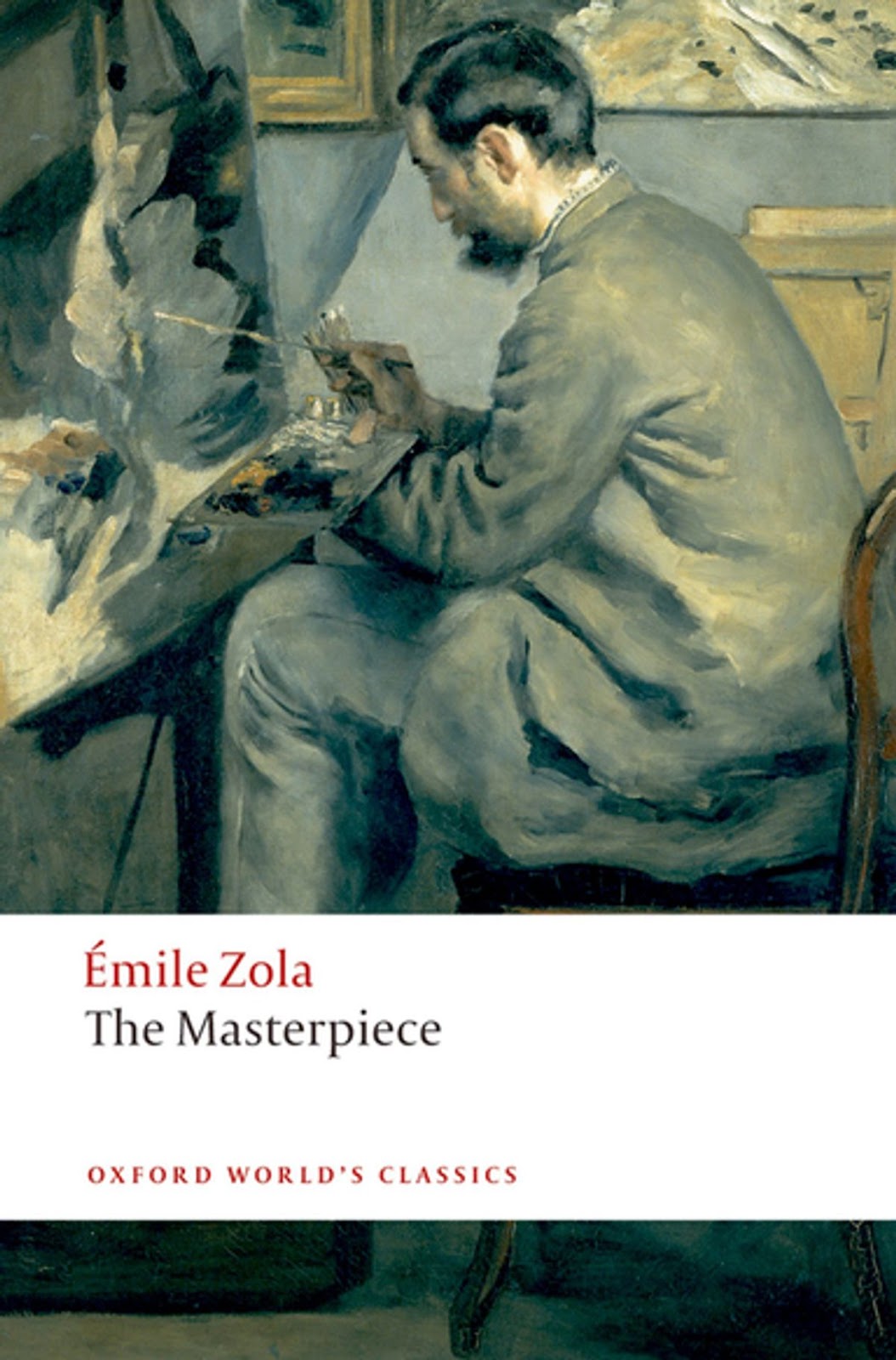
Some comments on Zola's Pessimism after reading The Masterpiece


Here is an excerpt from Zola's The Masterpiece. This is from the very last pages of the novel and it in a way serves as a conclusive summary of the problems and overall worldview evoked in the novel. These lines are spoken by Sandoz, Zola's alter-ego in the novel. (Sandoz gets all the best lines in the novel though Claude is the main hero and we get to know his thoughts only through a mode of free indirect discourse.)

It was inevitable. All our activity, our boastfulness about our knowledge was bound to lead us back again to doubt. The present century has cast so much light on so many things, but it was bound to end under the threat of another wave of darkness. … And that is the root of our troubles. We have been promised too much and led to expect too much, including the conquest and the explanation of everything; and now we’ve grown impatient. We’re surprised things don’t move more quickly. We’re resentful because, in a matter of a hundred years, science hasn’t given us absolute certitude and perfect happiness. Why then continue, we ask, since we shall never know everything and our bread will always be bitter? The century has been a failure. Hearts are tortured with pessimism and brains clouded with mysticism for, try as we may to put imagination to flight with the cold light of science, we have the supernatural once more in arms against us and the whole world of legend in revolt, bent on enslaving us again in our moment of fatigue and uncertainty. … I’m no more sure of things than anyone else; my mind, too, is divided. But I do think that this last shattering upheaval of our old religious fears was only to be expected. We are not an end; we are a transition, the beginning only of something new. … And it’s that sets my mind at rest, and somehow encourages me: to know we are moving towards rationality and the firm foundations that only science can give.
Zola is often criticized for being a pessimist, not an ordinary pessimist but a more dogmatic and recalcitrant pessimist, even going so far as to deliberately structure his novels in order to prove this pessimistic thesis, the idea that men are not some "metaphysical marionettes" gifted with a divine or mystical free will but "physiological men" who are subject to laws of nature (pre-eminently, heredity) and the vicissitudes of their environment. (This is also something that Marxist critics like Georg Lukacs dislike in Zola, because it questions the innate humanism of Marxist philosophy)

Just to give a perspective to this debate about pessimism, here is an excerpt from an essay by Henry James, where he advises young novelists to avoid the dogma of either pessimism or optimism and instead be true to Life (available here, emphasis mine)
This freedom is a splendid privilege, and the first lesson of the young novelist is to learn to be worthy of it. “Enjoy it as it deserves,” I should say to him; “take possession of it, explore it to its utmost extent, publish it, rejoice in it. All life belongs to you, and do not listen either to those who would shut you up into corners of it and tell you that it is only here and there that art inhabits, or to those who would persuade you that this heavenly messenger wings her way outside of life altogether, breathing a superfine air, and turning away her head from the truth of things. There is no impression of life, no manner of seeing it and feeling it, to which the plan of the novelist may not offer a place; you have only to remember that talents so dissimilar as those of Alexandre Dumas and Jane Austen, Charles Dickens and Gustave Flaubert have worked in this field with equal glory. Do not think too much about optimism and pessimism; try and catch the colour of life itself. In France to-day we see a prodigious effort (that of Emile Zola, to whose solid and serious work no explorer of the capacity of the novel can allude without respect), we see an extraordinary effort vitiated by a spirit of pessimism on a narrow basis. M. Zola is magnificent, but he strikes an English reader as ignorant; he has an air of working in the dark; if he had as much light as energy, his results would be of the highest value. As for the aberrations of a shallow optimism, the ground (of English fiction especially) is strewn with their brittle particles as with broken glass. If you must indulge in conclusions, let them have the taste of a wide knowledge. Remember that your first duty is to be as complete as possible—to make as perfect a work. Be generous and delicate and pursue the prize. 
But like in the excerpt from The Masterpiece posted above, Zola's pessimism is not as simple and straightforward as it seems. Zola is relentless in his focus on decadence and degeneration but his intellect rebels against it. Zola's was a case of pessimism of the will and the optimism of the intellect. Zola was writing his Rougon-Macquant novels when these theories were in the air in France, so to speak. For example, see Max Nordau's Degeneration, published contemporaneously with Zola's novels, a book which had a dark afterlife in the Nazi Germany where degenerate art took on a different meaning. (Ironically, Nordau, a Jewish physician himself, thought of growing anti-semitism itself as a mark of decadence and degeneracy, for example in the context of Wagner).

Many of Zola's own disciples, most famously Maupassant and Huysmans, and later other leading lights of the literary decadent movement in France, not as well-known outside France, abandoned Zola's "optimism of the intelllect" and gave in whole-heartedly to the pessimism of the will and even eventually to nihilism. Schopenhauer was one of the leading intellectual figures for these writers, and his theories became very popular, specially as the general cultural mood in France soured after the catastrophic defeat in the Franco-Prussian war. The debacle seemed to prove to these writers that French race was indeed weak and degenerate, and deserved the punishment it got in the war. Zola tackles these themes in the context of the war in his novel La Débâcle, where one of his heroes Maurice is said to have learned these pessimistic theories in the intellectual circles of Paris, and is seen to be obsessed with the idea of Life itself as a form of War (in the Darwinian sense), a war in which weak and degenerate are routed and which then paves way for a much healthier society and race. This view also had dark aftereffects later in the context of first world war, where many French intellectuals (even including giants like Bergson) turned warmongers and justified war in these pseudo-mystical terms based on the philosophy of vitalism. I had touched upon some of these themes in my earlier blog on La Débâcle.

In The Masterpiece, Zola tackles the problem of artistic decadence head-on. Like in the excerpt quoted at the top, Zola seems to suggest that the upsurge of decadence was itself a form of reaction, a reaction of romanticism and mysticism against the onward march of science, reason and progress. This romanticism not only affect one's view of world but the very idea of an artist. This reaction and in turn Claude, the artist figure, is a transitional figure, an inherited weak character, whose tragic spiritual weakness, leads him to succumb to this reaction and eventually leads to his tragic downfall.

Ironically, Zola himself is often grouped together with the decadent writers or at least is accused of paving the way for literary decadence (often by Marxist critics like Lukacs). A careful reading of The Masterpiece will serve to dispel these criticisms as it shows Zola was more interested in portrayal of decadence instead of its justification, a form of cultural "diagnosis" so to say. Like all great artists he gives all different sides of the "debate" an equal say in the novel, sometimes like Milton with Satan and Dostoevsky with Ivan Karamazov, he may even paint the other side in stronger terms so that the eventual "message" or the conclusion of work can get skewed against what he originally intended. So in The Masterpiece Claude ultimately turns out to be a tragic-heroic character, a sort of last gasp of the romantic ideal of art and artist.

I feel The Masterpiece is a very important work in Zola's oeuvre, even though in purely stylistic terms it is nowhere near his masterpieces like L'Assmmoir or Germinal, because it serves as self-reflexive statement of purpose or intent on behalf of Zola and it shows that his artistry was much more complex than what many of his own manifestos and pamphlets about "naturalism" or "experimental novel" seem to suggest. I have seen many readers are put off by some of the comments in those pamphlets which often reek of most basic and even a vulgar form of scientism, materialism and determinism, and they never to actually read his works and even when they do, they do it with that bias already gleaned from reading those manifestos. One should instead read this novel to get a good hold of Zola's artistic ambition and what he thought of the place of art in society and what its relationship with life and the real world was, and how that relationship was changing with the advent of science.

P.S. Zola's most sustained engagement with Schopenhauerian ideas and its critique is in his novel La Joie de Vivre (a recent English translation is titled The Bright Side of Life). It is not very well known and doesn't seem to be very widely read in English but it is one of my personal favourites of his novels. It is one of the most powerful evocations of the struggle between the two forces of optimism and pessimism about the nature of life that takes place in one's soul that I have ever read.

वेब परिणाम


all the dreadful, appalling morass of trifles that mires our lives

A short excerpt from Gogol's Dead Souls, to celebrate his birthday today. In the second paragraph one also gets a sense of the true nature of his literary project (This is from the beginning of the chapter 7 of the novel, translated by Robert Maguire)

Happy the wayfarer who, after a long and tedious journey, with its cold spells, slush, mud, groggy stationmasters, clanging bells, repairs, wrangles, coachmen, blacksmiths and scoundrels of every stripe encountered along the road, spies at length the familiar roof and the lights as they rush to meet him, and before him will appear the familiar rooms, the joyous cries of the servants as they run forth to greet him, the noise and scamper of the children and the soft, soothing talk broken by ardent kisses that have the power to blot from memory all that is sad. Happy the family man who has such a nook, but woe to the bachelor! 
Happy the writer who, after ignoring characters that are boring, repulsive, astounding in their sad actuality, gravitates towards characters that manifest the high dignity of man, who, out of the great maelstrom of images that whirl about him daily, has chosen only the few exceptions, who not once has altered the elevated pitch of his lyre, has not descended from his height to the level of his poor, insignificant brethren, and, without touching the earth, has given himself, all of him, over to his own images, which are exalted and removed far from it. Twice enviable is his splendid lot: he stands among them as if in his own family, and meanwhile, his fame spreads wide and clamorous. He has beclouded people’s eyes with intoxicating incense, he has flattered them wondrously, concealing what is sad in life, showing them man in all his splendour. All clap their hands and hasten after him, and rush to follow his triumphal chariot. A great universal poet they dub him, one who soars high above all the other geniuses of the world as an eagle soars above other high-flying birds. At the mere mention of his name, ardent young hearts are seized with trembling, responsive tears glisten in every eye. For strength he has no equal – he is a god! But such is not the lot, and different is the fate of the writer who has made bold to summon forth everything that at every moment lies before the eyes and is not perceived by indifferent eyes, all the dreadful, appalling morass of trifles that mires our lives, all that lies deep inside the cold, fragmented, quotidian characters with which our earthly, at times bitter and tedious, path swarms, and who with the robust strength of an implacable chisel has made bold to set them forth in full and bright relief for all the people to see! It is not for him to reap the plaudits of all the people, not for him to behold the grateful tears and unanimous enthusiasm of the souls that have been stirred by him; it is not to him that a sixteen-year-old girl will fly, head awhirl and hero-worshipful; not for him to lose himself in the sweet enchantment of sounds plucked forth by him alone; not, in fine, for him to escape the judgement of the time, the false, unfeeling judgement of the time, which will brand as worthless and base the creations cherished by him, will assign him an ignoble corner in the ranks of those writers who offend humanity, will attach to him the qualities of the heroes depicted by none but himself, will take from him his heart and soul and the divine flame of talent. For the judgement of the time does not acknowledge that equally wondrous are the lenses that survey suns and those that convey the movements of imperceptible insects; for the judgement of the time does not acknowledge that much spiritual depth is needed to illumine a picture drawn from ignoble life and elevate it into a pearl of creation; for the judgement of the time does not acknowledge that lofty enraptured laughter is worthy of taking its place beside the lofty lyrical impulse and that a whole abyss lies between it and the posturings of a clown in a fair-booth! This the judgement of the time does not acknowledge, and will turn it all to the reproach and ridicule of the unacknowledged writer; without due portion, without response, without sympathy, like a homeless wayfarer, he will remain alone in mid-road. Harsh is his chosen course, and bitterly will he feel his solitude.
And for a long time yet to come I am destined by a wondrous power to walk hand in hand with my strange heroes, to survey the whole of life in all the vastness of its onward rush, to survey it through laughter visible to the world and tears invisible and unknown to it! And distant as yet is that time when through a different font the awesome blizzard of inspiration will gush from a head invested in sacred horror and effulgence, and people will harken, in confused trepidation, to the majestic thunder of other speeches… 

Tuesday, March 31, 2020

"look of being committed to nothing in particular" - a facial description from Henry James's The American

A description of a face from The American by Henry James.

This is from the revised New York Edition published in 1908
His complexion was brown and the arch of his nose bold and well-marked. His eye was of a clear, cold grey, and save for the abundant droop of his moustache he spoke, as to cheek and chin, of the joy of the matutinal steel. He had the flat jaw and the firm, dry neck which are frequent in the American type; but the betrayal of native conditions is a matter of expression even more than of feature, and it was in this respect that our traveller's countenance was supremely eloquent. The observer we have been supposing might, however, perfectly have measured its expressiveness and yet have been at a loss for names and terms to fit it. It had that paucity of detail which is yet not emptiness, that blankness which is not simplicity, that look of being committed to nothing in particular, of standing in a posture of general hospitality to the chances of life, of being very much at one's own disposal, characteristic of American faces of the clear strain. It was the eye, in this case, that chiefly told the story; an eye in which the unacquainted and the expert were singularly blended. It was full of contradictory suggestions; and though it was by no means the glowing orb of a hero of romance you could find in it almost anything you looked for. Frigid and yet friendly, frank yet cautious, shrewd yet credulous, positive yet sceptical, confident yet shy, extremely intelligent and extremely good-humoured, there was something vaguely defiant in its concessions and something profoundly reassuring in its reserve. The wide yet partly folded wings of this gentleman's moustache, with the two premature wrinkles in the cheek above it, and the fashion of his garments, in which an exposed shirt-front and a blue satin necktie of too light a shade played perhaps an obtrusive part, completed the elements of his identity. 

Same passage from the original version published in 1877
His complexion was brown, and his nose had a bold well-marked arch. His eye was of a clear, cold gray, and save for a rather abundant moustache he was clean-shaved. He had the flat jaw and sinewy neck which are frequent in the American type; but the traces of national origin are a matter of expression even more than of feature, and it was in this respect that our friend’s countenance was supremely eloquent. The discriminating observer we have been supposing might, however, perfectly have measured its expressiveness, and yet have been at a loss to describe it. It had that typical vagueness which is not vacuity, that blankness which is not simplicity, that look of being committed to nothing in particular, of standing in an attitude of general hospitality to the chances of life, of being very much at one’s own disposal so characteristic of many American faces. It was our friend’s eye that chiefly told his story; an eye in which innocence and experience were singularly blended. It was full of contradictory suggestions, and though it was by no means the glowing orb of a hero of romance, you could find in it almost anything you looked for. Frigid and yet friendly, frank yet cautious, shrewd yet credulous, positive yet sceptical, confident yet shy, extremely intelligent and extremely good-humored, there was something vaguely defiant in its concessions, and something profoundly reassuring in its reserve. The cut of this gentleman’s moustache, with the two premature wrinkles in the cheek above it, and the fashion of his garments, in which an exposed shirt-front and a cerulean cravat played perhaps an obtrusive part, completed the conditions of his identity. 

Saturday, March 28, 2020

the whim of almighty Work!

An excerpt from Zola's The Masterpiece about the trials and tribulations of being an artist. The character speaking these lines, Sandoz, is a thinly veiled self-portrait of Zola himself.
The thing is, work has simply swamped my whole existence. Slowly but surely it’s robbed me of my mother, my wife, and everything that meant anything to me. It’s like a germ planted in the skull that devours the brain, spreads to the trunk and the limbs, and destroys the entire body in time. No sooner am I out of bed in the morning than work clamps down on me and pins me to my desk before I’ve even had a breath of fresh air. It follows me to lunch and I find myself chewing over sentences as I’m chewing my food. It goes with me when I go out, eats out of my plate at dinner and shares my pillow in bed at night. It’s so completely merciless that once the process of creation is started, it’s impossible for me to stop it, and it goes on growing and working even when I’m asleep. … Outside that, nothing, nobody exists. I go up to see my mother, but I’m so absorbed that ten minutes afterwards I’m asking myself whether I’ve been up to her or not. As for my wife, she has no husband, poor thing; we’re never really together any more, even when we’re hand-in-hand! Sometimes I feel so acutely aware that I’m making them both unhappy that I’m overcome with remorse, for happiness in a home depends so much on kindness and frankness and gaiety. But do what I will, I can’t escape entirely from the monster’s clutches, and I’m soon back in the semiconscious state that goes with creation and just as sullen and indifferent as I always am when I’m working. If the morning’s writing’s gone smoothly, all well and good; if it hasn’t, all’s not so good; and so the whole household laughs or cries to the whim of almighty Work! … That’s the situation. I’ve nothing now I can call my own. In the bad old days I used to dream about foreign travel or restful holidays in the country. Now that I could have both, here I am hemmed in by work, with no hope of so much as a brisk walk in the morning, a free moment to visit an old friend, or a moment’s self-indulgence! I haven’t even a will of my own; it’s become a habit now to lock my door on the world outside and throw my key out of the window. … So there we are, cribbed and confined together, my work and me. And in the end it’ll devour me, and that will be the end of that! 
One of the recurring themes in the novel is the critique of romantic conception of the "Artist" as someone hankering after an impossible ideal, a kind of mystical and harmonious whole. Zola instead wanted writers and artists to be like sober-minded scientists, (or "naturalists" in its original sense) but like all true artists he gives the best lines to characters speaking against his own view.

Monday, April 29, 2019

Some Notes on Émile Zola's La Débâcle


When you call your novel La Débâcle, there is really not much suspense regarding how the story of the war will unfold, even if you don't know much of the subject in question, namely the history of the Franco-Prussian war of 1870-71. In fact, Zola himself summarizes the story of the debacle very early in the novel, in fact in the first chapter itself when he gives the following words to one of his characters who is visiting the soldiers who are waiting for orders to maneuver to the battlefronts.

the ageing Empire, still cheered by the people but rotten at the core, having undermined the nation’s pride in itself by taking away liberty, returning to a liberal stance too late and to its own damnation, poised to crumble and fall the moment it failed to satisfy the appetite for worldly pleasures which it had itself unleashed; without doubt the army possessed an admirable pedigree for bravery, heaped with laurels from Italy and the Crimea, but it had been marred by the practice of buying one’s way out of national service, had got stuck in the old routine of the African school, and was too confident of victory to think of trying to develop new techniques; finally you had the generals, most of them mediocre, consumed by rivalries, some of them staggeringly ignorant, with the Emperor at their head, ailing and indecisive, deceived by others, deceiving himself, in the dreadful adventure which was now beginning, where everyone was leaping in blindly, with no serious preparation, stampeding in terror like a herd of cattle being led to the slaughterhouse.
If you have read Zola's earlier novels in the Rougon-Macquart cycle (La Débâcle is the 19th, the penultimate novel) you would know what he means by "taking away liberty" and "returning to the liberal stance too late" and also what means by unleashing the appetite for worldly pleasures. Zola documented all these in his novels like The Belly of Paris, The Kill and Nana. La Débâcle can only be read as a postscript to those earlier novels in the cycle, because otherwise this theme of the second empire facing its endgame and getting its just comeuppance, which is really a central concern for Zola, wouldn't make that much of an impression. In this sense, this is definitely not something you should read if you are new to Zola. Also worth noting is the phrase from the last line in the passage above, "like a herd of cattle being led to the slaughterhouse" because Zola will keep coming back to similar images and metaphors throughout his representation of the war in the novel.

Like all of Zola's novels, this is also very neatly structured. (Zola spent as much time, if not more, planning and researching his novels as he did in writing them.) La Débâcle is divided into three parts, each about 150-200 pages long. In the first part, which is set over a few days in the last week of August 1870, we follow a small army division as they try to follow confusing orders from the high command. They move forward only to retreat back to the position they already left, where again they wait agonizingly as they get new orders to move to a new position and all this while they are short of food rations and suffering from low morale. Like Zola alluded in the quoted passage above, it was all due to the senior military commanders' lack of preparation and poor understanding of military logistics. The French military commanders and leaders were in this sense no match to Bismarck and Helmuth von Moltke, the Prussian chief of military staff, both of whom are now actually considered the finest military and strategic minds of the nineteenth century Europe. The Prussians were able to move vast number of soldiers and huge army divisions much more quickly than the French which ultimately proved decisive in the end. Zola mentions at one point in the novel that the French military leaders didn't even have maps of their own terrain and had little understanding of the geography which would cause logistics problems, they only had maps of Prussia!

Zola as is always the case, is very good at intermingling micro and macro perspectives. Most of the time the narrative hews close to the perspective of two protagonists: Jean, a former soldier who fought in the battle of Solferino and who had a tragic experience when he decided to build his life as a peasant (Zola tells this story in "Earth") and Maurice, a young Parisian with a nervous and hysterical disposition (Zola repeatedly stresses his "effeminacy") who has lived a dissolute life in Paris supported by the sacrifices of his twin sister Henriette. Maurice sees war as his chance to redeem his life, in the eyes of himself and his sister. Maurice is also presented as an "intellectual" (somewhat similar to Lazare in Zola's The Bright Side of Life) who has some very interesting ideas on the nature of life and the justification of war. (More on this later.) The growing friendship and attachment between Jean and Maurice, and there are ample hints to suggest that it could be sexual attachment too, forms an important strand of the story here.

Even when we remain close to the perspective of Jean and Maurice, Zola makes sure that we know what else is going on in the battle. In this sense, it is very different from the representation of the war in Stendhal's "The Charterhouse of Parma", which is depicted purely from the individual perspective of Fabrizio and because of which we experience war as only chaos and confusion, sometimes even comic confusion. Zola here uses different kinds of narrative devices, some readers may even feel that these are clumsy devices, like a character randomly picking up a week old newspaper and reciting all the events that have happened on different battle fronts and in Paris, or a civilian character visiting the camp and telling them about what is happening outside and all the rumours circulating, both exaggerating the wins and also the defeats. At one point we are told that Maurice's grandfather fought in the Napoleonic campaigns, which gives Zola an excuse to give a long history of all those battles, basically depicting the French self-understanding of being the only superpower in Europe at the time, and bring to perspective the big shock that awaited them!

The second part of the novel chronicles the events of the battle of Sedan, when the army division that Jean and Maurice were part of reaches Sedan and joins others already waiting there. Zola narrates the events of a single day of the battle over almost 200 pages from multiple different perspective. We of course get the battle sequences, but we also see civilians participating in the war in many different ways. In fact this was probably my favourite part of the book. The sequence where Henriette makes a journey arcoss the battle zone to find out the fate of her husband Weiss is heartstopping and it shows Zola at the peak of his mastery. Battle of Sedan is pretty much presented as a slaughterhouse as he had alluded earlier in the novel, with long descriptions of unimaginable loss and destruction.

Zola further ups the ante in the third part of the novel when it comes to depicting the aftermath of the disaster. We get long descriptions of scenes set in the makeshift hospital with endless descriptions of battle wounds, amputations and deaths. The image of dead bodies being thrown on the "charnel heap" is not easily forgotten. We also see the appalling conditions of French soldiers in the prisoner of war camp as they struggle with hunger and starvation. There is a revolting scene of a starving horse being butchered for raw meat, Zola doesn't spare you any of the ugly details and you need a strong stomach and heart to read through these passages. In the middle of all these apocalyptic situations, the sordid human drama continues apace. We see the failed and disappointed hopes of innocents, we see people making use of the situation to make profit, we see betrayals, we see summary executions, we even see adultery!

In the last two chapters of the novel, the scene shifts back to Paris. Zola through a complicated and somewhat clumsy narrative maneuvering brings all three main characters Jean, Maurice and Henriette together for a final confrontation. After about 500 pages Zola seemed in a hurry to finish the novel so we get a short and rapid crash course in the history of the Paris commune. Some readers who think of Zola as a leftist revolutionary radical will be a little surprised to read these passages. He portrays the revolution as unleashing of violent and beastly passions, something irrational and destructive in its contempt for the rule of law and to sanctity of property and ultimately contrary to the true patriotic spirit of France, specially in its fratricidal struggle. He makes the fratricidal battle almost literal when he makes Jean stab Maurice (though unwittingly and without recognizing him) with his bayonet fatally during a struggle. There are unforgettable descriptions of fire engulfing the big government buildings, specially resonant given the recent event with Notre-Dame cathedral in Paris. Although harsh on the communards, Zola is no less critical of the other side who he openly calls butchers, for their summary executions in which they not only killed innocents but even women and children.

Before I end I wanted to touch on a rather troubling theme in the novel. This is also something that links this novel to Zola's aesthetic and philosophical doctrines, which were hugely controversial at the time and still provoke debate and passionate disagreements. This is his tendency to reduce history and politics, and indeed the whole of reality to biological or "naturalistic" imperatives. He gives some of these thoughts in the novel to Maurice, who is presented as an intellectual figure from Paris and contrasts it with more commonsensical optimist figure of the peasant Jean (although this itself is in contradiction to Zola's dark and pessimistic portrait of peasantry in "Earth"). Take the following thought for example:

But Maurice, back in the thrall of his learning, was thinking about the necessity of war, war which is life itself, war which is the law of the world. After all, wasn’t it man, full of pity, who had introduced the idea of peace and justice, while impassive nature is nothing but an endless massacre?
Even when he is dying at the end, he can't stop thinking:
War’s life, and life can’t exist without death.
Since this idea is presented in a "dialogic" form in the novel and is undercut by Jean's perspective, so this is really hard to argue that novel presents this as an argument but one can still see a connection with Zola's doctrines here. Although Zola of course couldn't have known it at that time but this kind of biological mysticism and the related philosophy of vitalism (or what the Germans call Lebensphilosophie) had an entirely deleterious impact on 20th century European history with its contribution to the doctrines of racial decline and race survival and of course to racism, fascism, genocide and the ideology of the perpetual war. Christopher Clark in his book "The Sleepwalkers," which is about the origins of the first world war, says that the fact that so many diplomats and intellectuals, specially in France and Germany, took the idea of war as a necessity for racial survival was one of the major factors in the breakdown of negotiations which could have prevented the war. Anyway, this is a big and complicated topic and certainly something that I am not fully intellectually qualified to comment on meaningfully. I hope to read and think more on it in due course.

Be that as it may, I still consider it to be a major work not just in Zola's own oeuvre but the whole of 19th century European novel and the literature of war. That said, you shouldn't read this if you are new to Zola. Read L'Assommoir, Germinal and Earth first.


Friday, April 5, 2019

An excerpt from The Radetzky March

An excerpt from The Radetzky March, which clarifies some of its central themes

***********************

It was very still. The final glint of twilight had long since vanished. Through the narrow gaps of the green blinds they could have seen a few stars in the sky. The broad and blaring chant of the frogs had been replaced by the quiet metallic chant of the nightly field crickets. From time to time they heard the harsh cry of the cuckoo.

The district captain, put in an unfamiliar, almost enchanted state by the alcohol, the bizarre surroundings, and the count’s unusual words, stole a glance at his son, merely to see a close and familiar person. But Carl Joseph too seemed neither close nor familiar to him. Perhaps Chojnicki was correct and they all really no longer existed: not the Fatherland nor the district captain nor his son! Straining greatly, Herr von Trotta managed to ask, “I don’t understand. How can you say the monarchy no longer exists?”

“Naturally!” replied Chojnicki. “In literal terms, it still exists. We still have an army”—the count pointed at the lieutenant—“and officials”—the count pointed at the district captain—“but the monarchy is disintegrating while still alive; it is doomed! An old man, with one foot in the grave, endangered whenever his nose runs, keeps the old throne through the sheer miracle that he can still sit on it. How much longer, how much longer? This era no longer wants us! This era wants to create independent nation-states! People no longer believe in God. The new religion is nationalism. Nations no longer go to church. They go to national associations. Monarchy, our monarchy, is founded on piety, on the faith that God chose the Hapsburgs to rule over so and so many Christian nations. Our Kaiser is a secular brother of the Pope, he is His Imperial and Royal Apostolic Majesty; no other is as apostolic, no other majesty in Europe is as dependent on the grace of God and on the faith of the nations in the grace of God. The German Kaiser still rules even when God abandons him; perhaps by the grace of the nation. The Emperor of Austria-Hungary must not be abandoned by God. But God has abandoned him!”

The district captain rose to his feet. He would never have believed there could exist a person in this world who could say that God had abandoned the Kaiser. All his life he had left matters of heaven to the theologians and regarded the church, the mass, the Corpus Christi ceremony, the clergy, and the Good Lord as institutions of the monarchy; but now all at once, the count’s statement seemed to explain all the confusion he had been feeling for the past few weeks, especially since old Jacques’s death. That was it: God had abandoned the old Kaiser! The district captain took a few steps, the old boards creaking under his feet. He went over to the window, and through the gaps in the blinds he saw the narrow stripes of the dark-blue night. All processes in nature and all events of everyday life suddenly achieved an ominous and incomprehensible meaning. Incomprehensible was the whispering chorus of crickets, incomprehensible the twinkling of the stars, incomprehensible the velvety blue of the night, incomprehensible the district captain’s trip to the border and his visit with this count. He returned to the table and ran his hand over one sideburn, as he would do whenever he felt a bit perplexed. A bit perplexed? Never had he been as perplexed as he was now!

In front of him stood a full glass. He swiftly drained it. “So,” he said, “you believe, you believe that we—”

“Are doomed,” Chojnicki completed. “We are doomed, you and your son and I. We are, I tell you, the last members of a world in which God sheds his grace on majesties, and lunatics like myself make gold. Listen! Look!” And Chojnicki stood up, went to the door, turned a switch, and the lights on the large chandelier shone. “Look!” said Chojnicki again. “This is the age of electricity, not alchemy. Chemistry too, you know! Do you know what this thing is called? Nitroglycerine.” The count articulated each syllable. “Nitroglycerine!” he repeated. “No more gold! In Franz Joseph’s palace they still often burn candles. Do you understand? Nitroglycerine and electricity will be the death of us! It won’t last much longer, not much longer!”

Thursday, April 4, 2019

The Radetzky March read along - notes on part 1

{ This is a good excuse to revive this dead blog. }

Thanks to Lizzy for emailing the questions for the readalong and the discussion in advance. It certainly made the task of writing this blog much easier.

Ok so here we go:

Welcome to the #germanlitmonth spring readalong of Joseph Roth’s most famous novel, The Radetzky March.  What enticed you to readalong with us?

"The Radetzky March" is one of my European novels of all time. I first read it in 2007 and I was immediately struck by, more than anything else, its vision of History (note the capital 'H'). It is a Historical novel not just in the sense of being set in a specific period in the past but also in the sense of having a specific vision and a specific attitude towards the process of Historical change and the meanings it may or may not have. The great Hungarian literary critic and philosopher Georg Lukacs said that only the novels which do the latter can be called Historical novels and the novels which treat the past as just a background setting for the story and characters are merely "antiquarian" novels, and he naturally was quite dismissive of the latter. The Radetzky March is a true historical novel as per this definition even though it seems to invert the conception of Histoical process Lukacs and other Marxist philosophers believed in. In this sense it is probably much closer to the philosophy of History that Lukacs's contemporary Walter Benjamin believed in namely a "catastrophe, which unceasingly piles rubble on top of rubble."

Reading the novel at the time also made me think and question certain ideas and beliefs which I had always thought to be too obvious, too common-sensical to question or think about. When you think about standard oppositional concepts like democracy and monarchy or Nationalistic self-determination and Empire, or History as a story of progress and History as a Disaster, it is obvious for most of us to choose the former in each case. Roth made me rethink all these assumptions. Even outside of these lofty intellectual excursions, I was very deeply and very personally moved by the melancholy and the despair and the vision of the decline that Roth brings to the story. It is not just the despair of a specific set of characters or specific events described in the story but an all consuming despair which colours and touches everything Roth describes and gives everything a flavour of the apocalyptic and an aura of mourning. For a lot of Europeans of Roth's generation, specially the Jews, the end of the Austro-Hungarian felt as an apocalyptic event in their personal lives. This novel is an expression of that feeling.

Long story short, I love this novel and I jumped on the idea of revisiting this after such a long time.

Which edition/translation are you using and how is it reading?

I am reading the Joachim Neugroschel translation published by Penguin Modern Classics, which is the same as I read earlier. This edition comes with a substantive introduction by South African writer and Nobel laureate Nadine Gordimer. I will try to write a separate post or post some excerpts from her introduction later. Incidentally this is also a favourite novel of another Nobel laureate Mario Vargas Llosa, who calls it the greatest historical novel ever written.

I wanted to read the Michael Hoffman translation but I found it was a little too expensive here and since I already had this book I just decided to read this one. The translation appears fine to my non-expert ears.


Is the novel living up to your expectations?

Yes, it is. The first part is mostly setting up the background context. The story really kicks up only with the tragic duel scene towards the end of part one when it takes on dark and menacing undertones. The narrative never really lets up then on, specially as it moves to the fringes of the Austro-Hungarian empire where Roth is really in his elements. He himself came from Galicia which is in modern day Ukraine but at the time was part of the Austro-Hungarian empire just on the border with another Empire, the Russian empire.

How would you comment on the first few sentences? Is this an effective opening? “The Trottas were not an old family.  Their founder had been enobled following the battle of Solferino.  He was a Slovene.  The name of his village - Sipolje - was taken into his title.  Fate had singled him out for a particular deed.  He subsequently did everything he could to return himself to obscurity.” (Translation: Michael Hofmann)

It is definitely intriguing. I am always intrigued about the regions which lie on outskirts of Europe, specially Central and Eastern Europe. So the mention of a Slovenian village immediately intrigues me.

Roth subscribed to Chekhov’s view that a writer “should not be a judge of his characters or what they say, but an impartial witness”.  That doesn’t mean that we as readers need to be the same!  How do you feel about the hero of Solferino’s crusade to return to obscurity? What are the ramifications of this for his descendants?

I do not like making moral judgments about characters in a novel as if they were real people. I am more interested in thinking and learning about the representation of the character itself. What are the different techniques the author uses to represent the specific character's thoughts, feelings and actions and their interrelations and what all these together say about the personality of the character and in turn what all these may mean for the author's overall aims in telling this specific story.

Carl Josef von Trotta follows his grandfather into the military.  Is his life there honourable and meaningful? Is his fateful relationship with Dr Demant’s wife innocent?

Carl Josef von Trotta to me feels like a figure representing the decadent and dissipated spirit of the times he belonged to. He symbolizes the decline and death of an entire culture in the specific character of his own persona.

Strauss’s Radetzky March is heard almost as a refrain throughout this section.  What is the significance of that?

I need to read a little more about Strauss and the titular musical piece before I can comment but from what I understood my reading is that it provides a unifying character to the diversity of the empire much like secular emblems like a flag or a national song provide to modern nation states. No matter which part of the empire you belonged to, The Radetzky March always made people of the empire feel as if they belonged to a common whole.

Roth may not judge his characters, but his sights are aimed at other targets: the social order and the military code of honour, for instance.  How does Roth critique these?

Roth is generally written as a nostalgist for the old order. There is certainly some truth in that but it is not the whole truth. Roth is also unsparing in the depiction of the rigid strictures of social code and military honour which people lived with and which stifled genuine human aspirations and noble pursuits and often led to senseless tragedies, like the duel scene whose aftermath and the scenes that precede it Roth describes at such length and with so much feeling.

Set in what was very much a man’s world, what do you think of the way Roth portrays the female characters?

Both Frau Slama and Frau Demant in part one are presented in heavily sexualised terms, almost like seductresses. This is quite par for the course for the Austrian literature of the period. The Austrian society as a whole was extremely repressive of its women and of sexuality in general. At the same time, the character of a woman was highly sexualised. Prostitution and brothel culture was also very mainstream. In this sense it was as hypocritical as any other cultural historically, may be only a little extreme when it came to its representation in the arts. You can see this in this novel too with the casual ease with which the male characters visit the brothels! For more on sexuality in fin-de-siecle Austria also see: Otto Weininger's Sex and Character, Freud's "A Case of Hysteria", many of Arthur Schnitzler's stories specially "Fraulein Else", Robert Musil's The Confusions of Young Törless, and his short fiction collected in "Five Women" (specially Tonka). Some of these are most definitely misogynistic but they are also extremely provocative and provide a unique window into the culture of the period. There is also this view of sexuality as a form of dissipation and decadence that is of great interest to Roth as he develops these themes later in the novel

Do you have any further comments on this section?

I will raise two points here:

First the way Roth prefigures and presages death and decay in the narrative. Notice the repetitive scenes of characters visiting the cemeteries and imagining worms eating up the flesh of the dead and buried.

Here is Carl Josef von Trotta thinking about Frau Slama after her death:
The traces of the dead woman’s caressing hands still lay upon his skin, and his own warm hands still contained the memory of her cool breasts, and with closed eyes he saw the blissful weariness in her love-sated face, the parted red lips and the white shimmer of the teeth, the indolently bent arm, in every line of the body the flowing reflection of contented dreams and happy sleep. Now the worms were crawling over her breasts and thighs, and decay was thoroughly devouring her face. The more intense the dreadful images of rot before the young man’s eyes, the more vehemently they kindled his passion. It seemed to be reaching out into the incomprehensible boundlessness of those regions where the dead woman had vanished. I probably would never have visited her again, the lieutenant mused.
 A little later again musing about his grandfather's and father's (impending) death
The Hero of Solferino had grown old and died. Now the worms were devouring him. And his son, the district captain, Carl Joseph’s father, was also growing old. Soon the worms would be devouring him too.
The idea of death and decay is there in text almost like a musical refrain and as I remember it gets even more intense and prominent as the narrative progresses further.

The second point is Roth's repeated invocation of the portrait of the Emperor Franz Joseph and comparing its omnipresence with that of the God himself.

Here is just one example (you can find many such examples in the text and again, it gets intensified later in the story)
Carl Joseph’s gaze focused on the portrait of the Kaiser on the opposite wall. There was Franz Joseph in a sparkling-white general’s uniform, the wide blood-red sash veering across his chest and the Order of the Golden Fleece at his throat. The big black field marshal’s helmet with its lavish peacock-green aigrette lay next to the Emperor on a small, wobbly-looking table. The painting seemed to be hanging very far away, farther than the wall. Carl Joseph remembered that during his first few days in the regiment that portrait had offered him a certain proud comfort. He had felt that the Kaiser might step out of the narrow black frame at any moment. But gradually the Supreme Commander in Chief developed the indifferent, habitual, and unheeded countenance shown on his stamps and coins. His picture hung on the wall of the club, a strange kind of sacrifice that a god makes to himself. His eyes—earlier they had recalled a summer vacation sky—were now a hard blue china. And it was still the same Kaiser! This painting also hung at home, in the district captain’s study. It hung in the vast assembly hall at military school. It hung in the colonel’s office at the barracks. And Emperor Franz Joseph was scattered a hundred thousand times throughout his vast empire, omnipresent among his subjects as God is omnipresent in the world.
This is very important to the thematic development of one of the strands of the story. We modern readers, citizens of secular republics and nation states, may find it ridiculous to think of a time when people thought of their Monarchs as God-like figures but the power of this novel is that by the time you are finished reading it, the idea will not feel as ridiculous as it did originally.